对上海申博话语的修辞分析

VIP免费
i
Acknowledgements
It has been a long journey. During this voyage, numerous persons have helped me
to find a light in the dark sea of uncertainty. I really feel fortunate to have an
opportunity to learn from the following great persons.
First of all, I would like to express my sincere gratitude toward Professor Deng
Zhiyong, my supervisor, for his patient and inspiring instruction during my study at
USST. He fueled my interest in rhetoric from the very beginning, and his continued
support and encouragement has propelled me through the whole journey. His critical
readings of my term papers and informative advice have been of utmost importance in
my becoming academically trained. His serious scholarship and academic practices and
his agreeable personalities have influenced me immensely. He helped me acquire the
confidence to undertake this project and has been extremely helpful in his very
constructive criticism of the earlier drafts of the thesis. His devotion to teaching and
research, and his high sense of responsibility set a good example for me to follow in my
future study. I am very fortunate to have him as my supervisor. Without his help, this
work would have been impossible. Here, special thanks give to Associate Professor
Yang Tao for her carefully reading through my draft and providing a lot of precious
suggestions about language polishing.
Meanwhile, I would like to take this opportunity to express my heartfelt thanks to
the scholars in School of Foreign Languages of USST, including Professor Dai Weihua,
Professor Lv Le, Dr. Liu Qin, and Dr. Han Geling. I have benefited a lot from their
wonderful lectures.
And I will never forget the sweet memories shared with my classmates. Their
kindness and humor will stay in my deep heart forever.
Last but not least, a special word of thanks goes to my family. My parents, sisters
and brothers have given me the greatest encouragement and support all through my
school studies. Their never-ending confidence in my success is an ever-present source
of my further going. Special thanks also are due to my dear husband Zhou Longsheng.
We have been studying together since high school period. Love and support enable us to
have spent so many happy years together and will continue to keep us close and
inseparable in future days.
ii
ABSTRACT
As the World Expo 2010 is rapidly approaching, it has become a hot topic.
Scholars in different fields study it from different perspectives. In this paper, what we
focus on is the operation of the bidding discourse of the Expo 2010, which is the crucial
step for winning the bid. As we see it, Chinese rhetoric is quite different from western
rhetoric; besides, analysis of Shanghai‟s bidding discourse is still a virgin land at home
and abroad. Therefore, we try to critique here the discourse of Shanghai‟s bid for the
Expo 2010 through a rhetorical lens. It is worth mentioning that this analysis touches
upon not only written language but also visual image, and thus is intended to provide a
brand-new perspective — a rhetorical one — for analyzing the bidding discourse.
The bidding discourse is rhetorical, i.e. the discourse must consider how to
persuade audiences to accept what it transmits during the course of information
communication. In this study, we draw sources mainly from classical rhetoric, modern
rhetoric (especially that of Kenneth Burke), semiotics and communication, and develop
a rhetorical framework for persuasive analysis of the bidding discourse, trying to
explain how the bidding discourse succeeds in persuasion.
Based on the practices of other rhetorical researchers, we first work out a new
definition of rhetoric as a theoretical framework. We regard rhetoric as the practice of
using language or other symbolic means to influence people‟s thoughts, feelings,
attitudes and behaviors. Thus, the working definition of rhetoric consists of six basic
elements: rhetorical situation, rhetor, audience, rhetorical purpose, rhetorical means and
rhetorical strategy. Then we discuss the embodiment of each rhetorical element in the
bidding discourse. First, we analyze the exigence, the audience and constraints reflected
in the bidding discourse, employing Lloyd Bitzer‟s rhetorical situation theory. Then, we
focus on the critique of the bidding discourse‟s operation from a rhetorical angle, that is,
how rhetorical strategies, namely artistic proofs, aesthetic appeals, identification and
some others, are applied in the bidding discourse. According to Aristotle‟s
understanding of artistic proofs, we analyze the usages of logos, pathos and ethos in the
bidding discourse. Meanwhile, we study aesthetic appeals employed in the bidding
discourse, applying Sharon Crowley and Debra Hawhee‟s theory of figures of speech.
In the end, we discuss the application of “identification by sympathy,” “identification
by antithesis” and “identification by inaccuracy” in the bidding discourse according to
iii
Kenneth Burke‟s “identification” theory.
This research indicates that the bidding discourse‟s success in persuasion is an
important reason for the success in the bid. The successful application of western
rhetorical theories in Chinese delegates‟ bidding presentations and the video is a model
of triumphant use of rhetoric in the communication with foreigners. The bidding
discourse not only affects the audiences‟ emotions deeply, but also argues with them
rationally and persuades them with good characters as well. The language of the
discourse is very elegant and eloquent, having a strong power of persuasion. With this
study, we may, hopefully, get a better understanding of the rhetorical discourse,
strengthen our consciousness of rhetoric, and improve our communicative skills.
Key Words: rhetoric; rhetorical critique; the bidding discourse;
the Expo 2010 Shanghai
iv
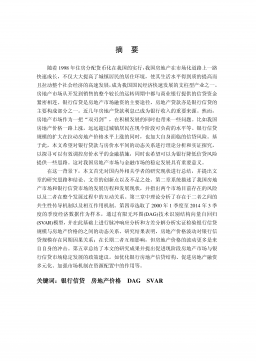
摘要
2010 年世博会离我们越来越近,成了当今热门话题。不同领域的学者从各种
角度围绕世博会展开了激烈的讨论。而我们关注的焦点是促成世博会的关键环节
——申博话语的运作过程。我们注意到,中国人所理解的修辞和西方修辞有很大
的差异,而国内外对上海申博话语的分析还是一片空白。因此,我们试图从修辞
的角度对上海申博话语进行分析。需要指出的是,本文所研究的申博话语不仅包
括书面语言而且还包括视觉语言,从而为申博话语提供了全新的全面的分析视角。
本研究旨在从修辞学角度分析申博话语的运作过程和申博取得成功的重要因素所
在。
申博话语具有修辞性,其表现在:话语在实现信息交流的过程中如何劝说受
众接受它所传递的信息。本文汲取了古典修辞学、博克新修辞学、符号学和交际
学等学科的研究成果,并以此为申博话语的修辞分析理论框架,试图从修辞学的
全新视角分析申博话语的劝说功能。
结合前人对修辞的理解,本文认为修辞是指通过运用语言或其他符号来影响
他人思想、情感、态度和行为的一种活动。因此,修辞应包括六大要素:修辞情
境、修辞者、受众、修辞目的、修辞工具和修辞策略,进而本文对各要素在申博
话语中的体现做了详尽的阐述。本文首先运用 Lloyd Bitzer 的修辞情境论,详细地
分析了该理论中的紧急状态(exigence)、受众(audience)和制约因素(constraints)在
申博话语中的体现,指出了申博话语实现的必然性和应考虑的各种因素。紧接着
重点分析了申博话语的修辞运作过程,即修辞策略在申博话语中的应用,主要有:
艺术劝说、美学诉诸、同一等。根据 Aristotle 对艺术劝说(Artistic Proofs)的理解,
我们分别从理性诉诸(Logos)、情感诉诸(Pathos)和人品诉诸(Ethos)对申博话语进
行了分析。同时,我们还运用 Sharon Crowley 和Debra Hawhee 对修辞格的分类进
行了美学诉诸(Aesthetic Appeals)在申博话语中的研究。最后,运用 Kenneth Burke
的“同一”(Identification)理论,分别论述了“同情认同”、“对立认同”和“误
同”在申博话语中的应用。
通过分析,我们发现申博之所以能取得成功,除了其他的因素,其中的一个
重要原因就是申博话语成功地实现了其劝说功能。中国代表在国际展览局(BIE)的
四次大会中的申博演讲以及最后一次会议上所放映的上海申博宣传片成功地运用
西方修辞学理论,不仅“动之以情”,而且“晓之以理”,同时“感之以威”。
其语言丰富、优美,具有极强的劝说性,成功地实现了演讲者与受众的认同。它
是我们中国人成功利用西方修辞学理论进行对外交流的典范。通过对上海申博话
v
语的修辞分析,可以加深我们对修辞话语的理解和认识,增强修辞意识,改善交
际策略。
关键词:修辞 修辞分析 申博话语 2010 年上海世博会
vi
List of Figures
Fig.3.1 Peirce‟s Semiotic Triangle…….……………………………………………….22
Fig.3.2 Richards‟ Semantic Triangle…….……………………………………………..22
Fig.3.3 Marlboro……………………………….……………………………………….30
Fig.3.4 Operational Mechanism of Rhetoric………….………………………………..35
Fig.4.1 Logo1…………………………………………………………………………..42
Fig.4.2 Logo2…………………………………………………………………………..42
Fig.4.3 Logo3…………………………………………………………………………..42
Fig.4.4 Banner…..……………………………………………………………………...42
Fig.4.5 Toulmin Model…………………………………………………………………43
Fig.4.6 Application 1 of Toulmin Model.………………………………………………45
Fig.4.7 Application 2 of Toulmin Model….……………………………………………45
Fig.4.8 Signing Ceremony of F1...……………………………………………………..47
Fig.4.9 Conference of APEC……….…………………………………………………..47
Fig.4.10 Smiling Face1…………………………………………………………………49
Fig.4.11 Smiling Face2…………………………………………………………………49
Fig.4.12 Smiling Face3…………………………………………………………………50
Fig.4.13 Smiling Face4…………………………………………………………………50
Fig.4.14 Relationship between Mother and Shanghai….………………………………51
Fig.4.15 Relationship of Three Proofs………….………………………………………53
Fig.4.16 Expectation……………………………………………………………………57
Fig.4.17 Dove....………………………………………………………………………..58
Fig.4.18 Dalmatian……………………………………………………………………..59
Fig.4.19 Identification1………………………………………………………………...60
Fig.4.20 Identification2………………………………………………………………...60
Fig.4.21 Identification3………………………………………………………………...61
Fig.4.22 Identification4………………………………………………………………...61

vii
Table of Contents
Acknowledgements .......................................................................................................... i
ABSTRACT .................................................................................................................... ii
摘要 ................................................................................................................................. iv
List of Figures ................................................................................................................ vi
Table of Contents……………………………………………………………………...vii
Chapter One Introduction ............................................................................................. 1
1.1 Research Backgrounds ........................................................................................ 1
1.2 General Purpose of the Study .............................................................................. 2
1.3 Methodology and Data Collection ....................................................................... 3
1.4 Structure of the Thesis ......................................................................................... 3
Chapter Two Literature Review .................................................................................... 5
2.1 The World Expo and the Expo 2010 Shanghai China ......................................... 5
2.1.1 Introduction of the World Expo ................................................................. 5
2.1.1.1 The World Expo and Its Origin........................................................ 5
2.1.1.2 Categories of the World Expo .......................................................... 6
2.1.1.3 Influence of the World Expo ............................................................ 7
2.1.2 The Expo 2010 Shanghai China ................................................................ 8
2.1.2.1 Introduction of the Expo 2010 ......................................................... 8
2.1.2.2 Backgrounds of the Bid for the Expo 2010 ..................................... 8
2.1.2.3 Significance of the Expo 2010 ........................................................ 9
2.2 Previous Studies on the Discourse of Shanghai‟s Bid for the Expo 2010 ......... 10
2.3 The Present Research ......................................................................................... 12
Chapter Three Defining Rhetoric ............................................................................... 13
3.1 A Brief Review of Notions of Rhetoric ............................................................. 13
3.2 The Working Definition of Rhetoric .................................................................. 15
3.2.1 Rhetorical Situation ................................................................................. 15
3.2.1.1 Lloyd Bitzer on Rhetorical Situation ............................................. 16
3.2.1.2 Elements of Rhetorical Situation ................................................... 17
3.2.1.3 Adaptation to the Situation ............................................................ 18
3.2.2 Rhetor and Audience ............................................................................... 18
3.2.3 Rhetorical Purpose ................................................................................... 20
3.2.4 Rhetorical Means ..................................................................................... 21
viii
3.2.5 Rhetorical Strategies ................................................................................ 23
3.2.5.1 Artistic Proofs ................................................................................ 23
3.2.5.2 Aesthetic Appeals .......................................................................... 26
3.2.5.3 Identification .................................................................................. 27
3.3 Visual Rhetoric .................................................................................................. 29
3.4 Omnipresence of Rhetoric ................................................................................. 31
3.5 Function of Rhetoric .......................................................................................... 32
3.6 Summary ............................................................................................................ 34
Chapter Four Shanghai’s Bidding Discourse through a Rhetorical Lens ............... 36
4.1 Rhetorical Nature of Shanghai‟s Bidding Discourse ......................................... 36
4.2 Rhetorical Situation of Shanghai‟s Bidding Discourse ..................................... 36
4.3 Rhetors and Audiences of Shanghai‟s Bidding Discourse ................................ 38
4.4 Rhetorical Strategies of Shanghai‟s Bidding Discourse .................................... 39
4.4.1 Artistic Proofs in Shanghai‟s Bidding Discourse .................................... 39
4.4.1.1 Logos ............................................................................................. 39
4.4.1.2 Ethos .............................................................................................. 48
4.4.1.3 Pathos ............................................................................................ 50
4.4.1.4 Summary ........................................................................................ 53
4.4.2 Aesthetic Appeals in Shanghai‟s Bidding Discourse .............................. 53
4.4.3 Identification in Shanghai‟s Bidding Discourse ...................................... 59
4.4.3.1 Identification by Sympathy ........................................................... 61
4.4.3.2 Identification by Antithesis ............................................................ 63
4.4.3.3 Identification by Inaccuracy .......................................................... 64
4.4.4 Other Strategies in Shanghai‟s Bidding Discourse .................................. 64
4.4.4.1 Testimony ...................................................................................... 64
4.4.4.2 Arrangement of Spokesperson ...................................................... 66
4.5 Summary ............................................................................................................ 67
Chapter Five Conclusion .............................................................................................. 68
5.1 Brief Summary of the Study .............................................................................. 68
5.2 Limitations and Suggestions for Future Study .................................................. 69
Appendices .................................................................................................................... 70
BIBLIOGRAPHY ......................................................................................................... 85
在读期间公开发表的论文 ............................................................................................ 88

Chapter One Introduction
1
Chapter One Introduction
1.1 Research Backgrounds
The World Expo (short for the World Exposition) is a global, non-commercial
exposition,which is now the largest international exposition for exhibitors to show their
achievements concerning economy, society and culture as well as science and
technology. So, the World Expo is regarded as “the Olympic Games of the economy,
science and technology.” The Expo 2010 will be held in Shanghai, China, which is a
grand event for China and the whole world at the beginning of the 21st century. Hosting
a successful and splendid World Expo is crucial for China in its drive to fully build a
well-off society and speed up socialist modernization.
With the Expo 2010 rapidly approaching, more and more people are concerned
with it. It has become a popular subject in the academic community and has been
approached from a wide range of disciplines. However, the bidding for the Expo 2010,
as a most crucial step for holding the exposition, is paid less attention that it deserves at
the discourse level. Almost no one studies the bidding discourse from the linguistic
perspective, not to mention from the rhetorical aspect1. The rhetorical critique of
Shanghai‟s bidding discourse for the Expo 2010 is still a virgin land. Therefore, we
choose this subject for study.
Since some rhetorical theories will be used in the analysis of the bidding discourse,
it is necessary to explain what rhetoric refers to in our study. Generally speaking,
western rhetoric is quite different from Chinese rhetoric. In ancient times, western
rhetoric was regarded as the art of oratory. The term “rhētorikē” means public speaking
(Hu, 2002:2). Just as defined by Aristotle (1954:24), rhetoric is “the faculty of
observing in any given case the available means of persuasion.” And persuasion is the
key notion of rhetoric. Then, the twentieth century witnessed a renewed development in
the study of rhetoric, and rhetoric gained a wide expansion in its scope, function and
some other aspects. For Kenneth Burke (1969:41), rhetoric “is rooted in an essential
function of language itself, […] the use of language as a symbolic means of inducing
cooperation in beings that by nature respond to symbols.” That is, rhetoric involves any
symbol-using situation. However, Chinese rhetoric is another case. In China, as is
1 Here it refers to western rhetorical aspect. When we use the term rhetoric in this thesis, it all refers to western
rhetoric unless otherwise noted.

A Rhetorical Critique of the Discourse of Shanghai‟s Bid for the World Expo 2010
2
commonly believed, the mainstream conception of rhetoric can be portrayed as
language-centered. And the word “rhetoric” is always associated with figures, tropes
and other means of polishing language. Chen Wangdao (2001:3) considers rhetoric as
“an endeavor to adjust the language to better transfer the meaning and feeling;” Zhang
Zhigong (1998:575) holds it as “a working process to choose language materials for
certain purpose when using language;” while Wang Xijie regards it as “an activity in
managing language to improve the effectiveness in the expression”(Hu Fanzhu, 2002:2).
No matter what rhetoric is — “an endeavor,” “a process” or “an activity,” the main
theme in the studies of rhetoric in Chinese tradition is always something about the effect
of language. Thus, as we see it, the Chinese term “xiuci” connotes a very narrow view
of rhetoric. Hence, it is necessary for us to rediscover this classical discipline — rhetoric.
Besides, it is proved that rhetorical analysis is an effective tool for our better
understanding of natures of many different phenomena. Therefore, critiquing Shanghai‟s
bidding discourse through a rhetorical lens is supposed to be useful for us to get a better
understanding of the bidding operation for the Expo 2010.
1.2 General Purpose of the Study
The general purpose of the study is to analyze how Shanghai‟s bidding discourse
operates in persuasion through a rhetorical angle. As rhetoric is the key term of this
study, it is necessary to define what rhetoric is in this thesis. According to our
understanding, rhetoric is the practice of using language or other symbolic means to
influence peoples‟ thoughts, feelings, attitudes and behaviors. Then the working
definition of rhetoric consists of six basic elements: rhetorical situation, rhetor, audience,
rhetorical purpose, rhetorical means and rhetorical strategy. By critiquing the discourse
of bidding for the Expo 2010 with each rhetorical element, we hope that the bidding
discourse can be studied from a different and brand-new angle.
Additionally, it is worth mentioning that our analysis of the bidding discourse
touches upon not only written material but also visual images. So, “discourse” in this
thesis refers to both the written language and the visual image. As we all know, we
communicate with each other mostly through language in written and spoken forms.
Visual image, however, is also a quite important aspect. The study of rhetoric from
non-language aspect is called visual rhetoric, which is a new branch of rhetoric. It is still
a vacant lot for Chinese scholars to study. In this study, we use visual rhetoric to analyze

摘要:
展开>>
收起<<
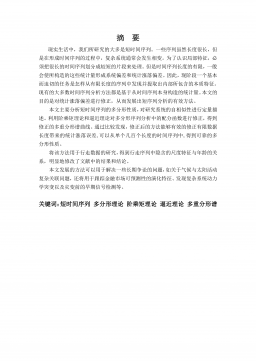
iAcknowledgementsIthasbeenalongjourney.Duringthisvoyage,numerouspersonshavehelpedmetofindalightinthedarkseaofuncertainty.Ireallyfeelfortunatetohaveanopportunitytolearnfromthefollowinggreatpersons.Firstofall,IwouldliketoexpressmysinceregratitudetowardProfessorDengZhiyong,mysupervisor,forhispatientand...
相关推荐
-
【拔高测试】沪教版数学五年级下册期末总复习(含答案)VIP免费
 2024-11-19 24
 -
【基础卷】小学数学五年级下册期末小升初试卷四(沪教版,含答案)VIP免费
 2024-11-19 16
 -
期中测试B卷(试题)-2021-2022学年数学五年级上册沪教版(含答案)VIP免费
 2024-11-19 19
 -
期中测试B卷(试题)- 2021-2022学年数学五年级上册 沪教版(含答案)VIP免费
 2024-11-19 25
 -
期中测试A卷(试题)-2021-2022学年数学五年级上册沪教版(含答案)VIP免费
 2024-11-19 27
 -
期中测试A卷(试题)-2021-2022学年数学五年级上册 沪教版(含答案)VIP免费
 2024-11-19 37
 -
期中测B试卷(试题)-2021-2022学年数学五年级上册 沪教版(含答案)VIP免费
 2024-11-19 38
 -
期中测A试卷(试题)-2021-2022学年数学五年级上册沪教版(含答案)VIP免费
 2024-11-19 40
 -
【七大类型简便计算狂刷题】四下数学+答案
 2025-03-18 27
 -
【课内金句仿写每日一练】四下语文
 2025-03-18 129
作者:侯斌
分类:高等教育资料
价格:15积分
属性:95 页
大小:1.3MB
格式:PDF
时间:2024-11-19

相关内容
-
期中测试A卷(试题)-2021-2022学年数学五年级上册 沪教版(含答案)
分类:中小学教育资料
时间:2024-11-19
标签:无
格式:DOCX
价格:5 积分
-
期中测B试卷(试题)-2021-2022学年数学五年级上册 沪教版(含答案)
分类:中小学教育资料
时间:2024-11-19
标签:无
格式:DOCX
价格:5 积分
-
期中测A试卷(试题)-2021-2022学年数学五年级上册沪教版(含答案)
分类:中小学教育资料
时间:2024-11-19
标签:无
格式:DOCX
价格:5 积分
-
【七大类型简便计算狂刷题】四下数学+答案
分类:中小学教育资料
时间:2025-03-18
标签:数学计算;校内数学
格式:PDF
价格:1 积分
-
【课内金句仿写每日一练】四下语文
分类:中小学教育资料
时间:2025-03-18
标签:无
格式:PDF
价格:1 积分