壳聚糖及壳聚糖固载β-环糊精高聚物的制备与性能研究

VIP免费
4
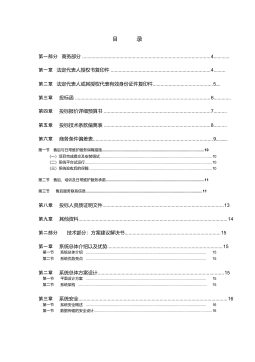
目录
摘要
ABSTRACT
前 言 ..................................................................................................................................................1
第一章 绪 论 ..................................................................................................................................... 3
§1.1 壳聚糖简介 ........................................................................................................................... 3
§1.1.1 甲壳素、壳聚糖的结构 .............................................................................................3
§1.1.2 甲壳素、壳聚糖的物理性质 .....................................................................................4
§1.1.3 甲壳素、壳聚糖的化学性质 .....................................................................................4
§1.2 壳聚糖的衍生化反应 ........................................................................................................... 5
§1.3 壳聚糖及其衍生物的应用 .................................................................................................. 8
§1.3.1 壳聚糖及其衍生物在医药上的应用 .........................................................................8
§1.3.2 壳聚糖及其衍生物作为功能材料 ...........................................................................10
§1.3.3 壳聚糖及其衍生物在环保方面的应用 .................................................................. 10
§1.4 壳聚糖及其衍生物作为吸附材料的研究进展 .................................................................11
§1.4.1 对各种金属离子的吸附 ...........................................................................................11
§1.4.2 对酸的吸附研究 .......................................................................................................12
§1.4.3 对染料的吸附 ...........................................................................................................12
§1.4.4 壳聚糖及其衍生物作为吸附材料在其他方面的应用 .......................................... 13
§1.5 环糊精简介 ......................................................................................................................... 14
§1.5.1 环糊精的结构 ...........................................................................................................14
§1.5.2 环糊精的物理性质 ...................................................................................................15
§1.5.3 环糊精的化学性质 ...................................................................................................15
§1.5.4 环糊精高聚物研究进展 ...........................................................................................15
§1.6 壳聚糖固载环糊精研究进展 ............................................................................................. 19
§1.6.1 物理共混法合成 CTS-CDP ..................................................................................... 19
§1.6.2 化学改性法合成 CTS-CDP ..................................................................................... 19
§1.6.3CTS-CDP 的应用 ...................................................................................................... 20
§1.7 课题研究的意义及内容 ..................................................................................................... 20
第二章 实验部分 ............................................................................................................................... 22
§2.1 实验仪器与材料 ................................................................................................................. 22
§2.1.1 实验仪器 ...................................................................................................................22
§2.1.2 实验材料与试剂 .......................................................................................................22
§2.1.3 标准溶液的配置方法 ...............................................................................................22
§2.2 壳聚糖的制备 ..................................................................................................................... 23
§2.2.1 壳聚糖的制备原理 ...................................................................................................23
§2.2.2 壳聚糖的制备方法 ...................................................................................................23
§2.2.3 壳聚糖脱乙酰度的测定 ...........................................................................................24
§2.3 壳聚糖固载环糊精高聚物(CTS-CD)的制备 ...............................................................24
§2.3.1CTS-CD 的制备原理 .................................................................................................24
§2.3.2 壳聚糖固载环糊精高聚物(CTS-CD)的制备方法 ............................................ 25
§2.3.3CTS-CD 中β-CD 固载量的测定 .............................................................................. 25
§2.4 吸附容量的测定方法 ......................................................................................................... 26
第三章 实验结果与讨论 ................................................................................................................... 28
§3.1 壳聚糖的制备方法研究 ..................................................................................................... 28
§3.1.1 壳聚糖制备条件的正交实验 ...................................................................................28
§3.1.2 反应温度对壳聚糖脱乙酰度的影响 ...................................................................... 29
§3.1.3 碱液浓度对壳聚糖脱乙酰度的影响 ...................................................................... 29
§3.1.4 反应时间对壳聚糖脱乙酰度的影响 ...................................................................... 30
§3.1.5 壳聚糖红外光谱分析 ...............................................................................................30
§3.1.6 小结 ...........................................................................................................................31
§3.2 壳聚糖吸附性能研究 ......................................................................................................... 32
§3.2.1 壳聚糖吸附条件的正交实验 ...................................................................................32
§3.2.2 pH 值对吸附效果的影响 .........................................................................................33
§3.2.3 吸附动力学曲线 .......................................................................................................33
§3.2.4 吸附动力学研究 .......................................................................................................34
§3.2.5 环境水体中共存离子的影响 ...................................................................................35
§3.2.6 等温吸附模型 ...........................................................................................................36
§3.2.7 吸附机理 ...................................................................................................................37
§3.2.8 小结 ...........................................................................................................................38
§3.3CTS-CD 的制备方法研究 ...................................................................................................38
§3.3.1CTS-CD 制备条件的正交实验 ................................................................................ 38
§3.3.2 反应温度对β-CD 固载量的影响 .............................................................................39
§3.3.3 交联剂(戊二醛)与β-CD 的摩尔比对环糊精固载量的影响 .......................... 40
§3.3.4 反应时间对β-CD 固载量的影响 .............................................................................41
§3.3.5 壳聚糖与β-CD 的重量投料比对β-CD 固载量的影响 ........................................ 41
§3.3.6CTS-CD 与壳聚糖电镜比较分析 ............................................................................ 42
§3.3.7 小结 ...........................................................................................................................43
§3.4 CTS-CD 的稳定性实验 ......................................................................................................43
§3.4.1CTS-CD 溶解性 .........................................................................................................43
§3.4.2CTS-CD 抗水解性能 .................................................................................................44
§3.4.3CTS-CD 抗氧化能力 .................................................................................................45
§3.4.4CTS-CD 抗紫外光照能力 ........................................................................................ 46
§3.4.5 小结 ...........................................................................................................................46
§3.5 CTS-CD 吸附性能研究 ......................................................................................................47
§3.5.1pH 值对吸附效果的影响 ..........................................................................................47
§3.5.2 吸附动力学曲线 .......................................................................................................48
§3.5.3 吸附动力学参数的确定 ...........................................................................................48
§3.5.4 阿伦尼乌斯(Arrhenius)公式与表观活化能 ...................................................... 51
§3.5.5 等温吸附模型 ...........................................................................................................52
§3.5.6 热力学参数的确定 ...................................................................................................56
§3.5.7CTS-CD 动态穿透曲线的绘制 ................................................................................ 58
§3.5.8CTS-CD 与壳聚糖对有机污染物的吸附能力对比 ................................................ 59
§3.5.9 CTS-CD 吸附机理 ....................................................................................................60
§3.5.10 小结 .........................................................................................................................61
第四章 结 论 ................................................................................................................................... 62
参考文献 ..............................................................................................................................................65
在读期间公开发表的论文和承担科研项目及取得成果 .................................................................70
致 谢 ..............................................................................................................................................71

壳聚糖及壳聚糖固载β-环糊精高聚物的制备与性能研究
摘要
目前,随着工业的发展,自然环境所承受的压力越来越大,如何充分利用自
然资源、治理环境污染成为人们最为关心的问题。
本文研究了一种天然高分子材料——壳聚糖的制备方法,并将其应用到水体
中污染物的处理中去,取得了良好的效果。在壳聚糖的基础上进一步进行化学改
性,合成了壳聚糖固载环糊精高聚物(CTS-CD),研究了 CTS-CD 的合成工艺,
同样将 CTS-CD 应用到水体中污染物的处理中。详细研究了壳聚糖和 CTS-CD 吸
附污染物过程的动力学和热力学特性,并探讨了它们的吸附机理。
壳聚糖是由甲壳素在碱溶液中脱乙酰得到的,研究了制备过程中各反应条件
的影响,确定了制备壳聚糖的最佳工艺条件为:反应温度 110℃、氢氧化钠浓度
50%、间歇反应时间 3h。所得产物脱乙酰度大于 94%。
将壳聚糖作为吸附剂,用于吸附水体中含有的有机染料、染料中间体、表面
活性剂等难降解的有机污染物,发现壳聚糖对上述污染物具有良好的吸附能力。
介质 pH 4 时吸附效果最好,此时吸附速度较快,3小时后吸附趋于平衡。室温下,
pH 4 的水溶液中壳聚糖对所试污染物的饱和吸附容量分别为:酸性红 B 442mg/g、
酸性嫩黄 G 419mg/g、十二烷基苯磺酸钠 345mg/g、R盐98mg/g。通过对壳聚糖
吸附动力学和热力学的研究发现,壳聚糖在弱酸性条件下对所试水溶性持久有机
污染物的吸附作用,符合 Langmuir 等温方程和二级吸附动力学方程。壳聚糖对有
机污染物的吸附主要是通过静电引力的作用,壳聚糖分子结构上的氨基与氢离子
形成带一个正电荷的 CTS-NH3+,CTS-NH3+与污染物分子上带负电的基团发生缔合
反应,生成缔合物,从而达到吸附的作用。
通过戊二醛的交联作用将β-环糊精(β-CD)引入到壳聚糖的分子结构中,合
成壳聚糖固载环糊精(CTS-CD)。产物 CTS-CD 具有空间网状结构。
研究了 CTS-CD 的合成方法,通过实验确定最佳制备条件为:壳聚糖与β-CD
的重量投料比(壳聚糖/β-CD)为 0.17、交联剂(戊二醛)与β-CD 的摩尔比
(glutaraldehyde/β-CD)为 3.0、反应温度 T为90℃、反应时间 t为90min。产物β-CD
固载量为 478.5μmol/g。
通过一系列破坏性实验,对 CTS-CD 的稳定性进行了研究,结果表明 CTS-CD
具有良好的稳定性:在酸性和碱性水溶液中都没有发生明显的溶解和水解现象,
具有很好的抗水解能力;经 H2O2(1%)、KMnO4(0.5%)和 HNO3(1%)强氧化剂
氧化后发生微弱降解,但降解一定时间后就趋于稳定,降解率小于 20%,具有较
好的抗氧化剂氧化性能;经紫外光长时间照射后没有发生降解,说明 CTS-CD 具
有很强的抗紫外辐射能力。
摘要
将CTS-CD用于吸附水体中含有的难降解有机污染物,研究表明CTS-CD对有
机污染物具有较强的吸附作用,吸附量大,吸附速度快。CTS-CD对有机污染物的
吸附受介质酸度的影响较大,在pH 3 时,吸附量达到最大。CTS-CD对有机污染
物的吸附速率也较快,在1小时左右就达到吸附平衡,并且吸附速率和饱和吸附容
量随着温度的升高而增大。在酸性红B初始浓度为0.500g/L,pH 3,CTS-CD投加
量为0.100g时,25℃、35℃、50℃、65℃下对酸性红B的饱和吸附容量分别为
367mg/g、383 mg/g、475 mg/g、552 mg/g。通过对吸附动力学的研究,计算出表
观活化能Ea=11.72 kJ·mol-1。
研究了CTS-CD吸附有机污染物的热力学特性,结果表明:CTS-CD对有机污
染物的吸附过程更加符合Langmuir等温吸附模型。CTS-CD对有机污染物的吸附过
程中ΔH>0,这表示在此条件下CTS-CD的吸附是吸热过程;并且此条件下吸附过程
的ΔG<0,说明吸附过程可自发进行。
CTS-CD对有机污染物的吸附机理与壳聚糖有较大差异,主要通过固载的β-CD
所特有的疏水空腔结构,在疏水键作用力下,对污染物分子中的某些疏水结构(如
苯环、萘环等)形成包络而实现的。
壳聚糖作为一种天然的高分子材料,具有来源广泛、可自然降解、无二次污
染等优点。壳聚糖本身可以有效地吸附水体中的某些有机污染物。通过化学改性,
将一种具有特殊疏水空腔结构的β-CD交联到壳聚糖的分子链上,合成了CTS-CD。
与壳聚糖相比,CTS-CD具有更加优秀的稳定性和更强的吸附能力。壳聚糖及其衍
生物(CTS-CD)可作为吸附材料,广泛应用于水污染的治理。
关键词:壳聚糖 β-环糊精 制备 理化性能 吸附 有机污染物
壳聚糖及壳聚糖固载β-环糊精高聚物的制备与性能研究
8
ABSTRACT
At present, as the development of industry, the pressure of the natural environment
was increasing. How to make full use of natural resources and control environmental
pollution, become the most concerns.
The preparation method of a natural polymer materials - chitosan and its
application to the treatment of pollutants in water were studied in this paper. A good
result was obtained. The chitosan-β-cyclodextrin polymer (CTS-CD) was prepared by
the further chemical modification on the basis of the chitosan, the synthesis of the
CTS-CD was studied and it was applied to the treatment of pollutants in water. The
kinetics and thermodynamics characteristics of the adsorption process of chitosan and
CTS-CD to pollutant were studied in detail. Their adsorption mechanisms were
explored.
Chitosan was prepared from Chitin by the deacetylation in alkali solution. The
impacts of the reaction conditions on the preparation were studied and the optimum
conditions of the preparation of chitosan were: reaction temperature 110 ℃, sodium
hydroxide concentration 50%, intermittent reaction time 3h . The deacetylation of the
product was more than 94%.
Chitosan was be applied to absorb some organic pollutants from water body such
as organic dyes, dye intermediates, surfactants. These organic pollutants were difficult
to degrade. The study results showed that chitosan has good adsorption capacities to
these organic pollutants. At the condition of pH 3, the saturated adsorption capacity of
chitosan reached the maximum. The adsorption was rapid and reached an equilibrium
status 3h later. At room-temperature and pH 4, the saturated adsorptive capacities of
chitosan for different contaminants were listed as follow: Acid Red B 442mg/g, Acid
Light Yellow G 419mg/g, SDBS 345mg/g, R Salt 98mg/g. The studies on the adsorption
thermodynamics and kinetics showed that the adsorption of chitosan for organic
contaminants followed Langmuir adsorption equation and second-order kinetic equation
in weak acid solution. The absorptions of these organic pollutants by chitosan are
mainly functioned by electrostatic attraction. Under weak acidic condition, the amino
group and the hydrogen ions in chitosan formed an ammonium ion group with a
positive charge (CTS-NH3+) which associates with electronegative groups of these
organic contaminants.
ABSTRACT
The β-cyclodextrin (β-CD) was immobolized onto the molecular structure of
chitosan by the cross-linking function of glutaraldehyde, so the chitosan-β-cyclodextrin
polymer (CTS-CD) was prepared. The product, CTS-CD was with network structure.
The synthesis method of CTS-CD was studied. The optimum conditions for
preparation were determined: the weight ratio between Chitosan and β-CD ( chitosan /
β-CD ) was 0.17, the mol ratio between crosslinking agent (glutaraldehyde) and β-CD
(glutaraldehyde/β-CD) was 3.0, the reaction temperature ( T ) was 90 ℃, and the
reaction time ( t )was 90 min. The immobilized β-CD of CTS-CD was 478.5 μmol /g.
The stability of CTS-CD was studied through a series of destructive experiments.
The results showed that the CTS-CD has a good stability: CTS-CD could not be
obviously dissolved and hydrolyzed in acidic and alkaline aqueous solutions. CTS-CD
could be weakly degraded by strong oxidants (1% H2O2, 0.5 % KMnO4and 1% HNO3),
but it moved toward steady status after a certain period of degradation. The degradation
rate was less than 20%.This results showed that CTS-CD had a good oxidation
resistance. CTS-CD could not be degraded after a long time UV irradiation, so CTS-CD
had a very good anti-ultraviolet irradiation.
CTS-CD was be applied to adsorb organic pollutants from water body. These
organic pollutants were difficult to degrade. The research esults shows that the CTS-CD
has strong adsorption capacities on these organic pollutants. The saturated adsorption
capacity of CTS-CD for organic pollutants is high, and the adsorption speed was very
rapid. The pH had obviously effect on the saturated adsorption capacity of CTS-CD. At
the condition of pH 3, the saturated adsorption capacity of CTS-CD reached the
maximum. The adsorption was rapid and reached an equilibrium status 1h later. The
saturated adsorption capacity increased with a rising adsorption temperature. When the
initial concentration of Acid Red B was 0.500 g/L and the dosing quantity of CTS-CD
was 0.100 g , at the condition of pH 3, the saturated adsorption capacity of CTS-CD for
Acid Red B at the temperature of 25℃, 35℃, 50℃, 65℃were 367mg/g, 383 mg/g,
475 mg/g, 552 mg/g, respectively. The apparent activation energy was calculated
through the study of adsorption kinetics: Ea=11.72 kJ • mol-1.
The adsorption thermodynamic properties of CTS-CD were studied. The results
showed that the adsorption of CST-CD for organic contaminants followed Langmuir
adsorption equation .The enthalpy change of the adsorption process was positive, this
result indicated that the adsorption process was a endothermic process. The gibbs free
壳聚糖及壳聚糖固载β-环糊精高聚物的制备与性能研究
energy change was negative, this result indicated that the adsorption process could
occur spontaneously.
The mechanisms of the adsorption of CTS-CD and chitosan were quite different.
The adsorption of organic pollutants on CTS-CD was mainly because of the
hydrophobic cavity of β-CD. Under the promoting of the hydrophobic bond, some
hydrophobic structure of organic pollutants (such as benzene, naphthalene ring, etc.)
were enveloped by the hydrophobic cavity of β-CD.
As a natural polymer material, chitosan was widely available, degradable and had
no secondary pollution. Chitosan itself could adsorb some organic pollutants from water
body effectively. Through chemical modification, CTS-CD could be synthesized by the
crosslinking reaction between chitosan and β-CD. The β-CD has a special hydrophobic
cavity structure. Compared with chitosan CTS-CD had a better stability and higher
adsorption capacity. Chitosan and its derivative (CTS-CD) could be widely applied to
the treatment of water pollution.
Keywords: Chitosan, β-Cyclodextrin, preparation, physical and
chemical properties, adsorption, organic contaminants
前言
1
前 言
“十一五”是我国全面建设小康社会的关键时期,环境保护被摆上了更加突
出的位置。《国民经济和社会发展第十一个五年规划纲要》提出,要加快转变经济
增长方式,发展循环经济,保护生态环境,加快建设资源节约型、环境友好型社
会,促进经济发展与人口、资源、环境相协调。国家确定了新形势下的环保工作
要实现三个转变:从重经济增长轻环境保护转变为保护环境与经济增长并重,从
环境保护滞后于经济发展转变为环境保护和经济发展同步,从主要用行政办法保
护环境转变为综合运用法律、经济、技术和必要的行政办法解决环境问题。国家
发改委、建设部、国家环保总局发布的《全国城镇污水处理及再生利用设施建设
“十一五”规划》中明确指出:“十一五”期间,预计我国将有 3320 亿元投向污
水处理及再生利用设施建设,全国城镇污水处理能力可达到 1亿吨/日。依据建设
部数据,到 2006 年年底,全国 656 个城市共有城市污水处理厂 814 座,日处理污
水能力为 6310 万吨,而“十一五”期间计划新增城市污水日处理能力 4500 万吨、
再生水日利用能力 680 万吨,形成 COD 削减能力 300 万吨。
庞大的水处理能力为水处理材料提供了广阔的应用前景。目前,用于工业废
水和生活污水处理的方法种类繁多,归纳起来可分为物理处理法、化学处理法和
生物处理法三种,吸附法是化学法中的一种,具有应用方便、处理污染物范围广、
处理设备占地面积小、能耗低等优点,在全国各工厂企业都有广泛的应用。可见,
我国环保领域水处理方面对吸附剂的需求量将很大。而吸附剂的选择是影响吸附
法处理废水、污水的最重要的因素。现有最常用的吸附剂是活性炭和离子交换树
脂等,这些吸附材料在印染、电镀、医药等废水的处理领域得到了广泛的应用。
但在使用中发现,这些吸附材料存在着自身无法克服的缺陷,比如粉末状活性炭
不易再生,且使用过程中会出现泄露、造成二次污染。颗粒状活性炭吸附速率不
快;离子交换树脂在使用过程中容易被污染等。这些缺陷大大制约了吸附法处理
废水的能力和应用范围。
随着国家“建设节约型社会”政策的施行,天然高分子吸附材料得到了人们
越来越多的关注。这其中,壳聚糖是甲壳素的脱乙酰基产物。而甲壳素是自然界
中广泛存在的一种天然高分子,存在于螃蟹的外骨骼、其他甲壳动物和一些真菌
细胞壁中,被誉为仅次于纤维素的第二大天然高分子聚合物。壳聚糖分子中含有
大量的羟基和游离氨基,具有良好的聚电解质性质,可吸附水中的染料、有机酸、
重金属离子等有毒有害物质,在水污染控制领域有着广泛的应用前景,日本现在
每年用于水处理的壳聚糖有 500 吨之多。壳聚糖是变废为宝的天然高分子聚合物,
无毒、无害、可生物降解,同时它还具有价廉、能再生、不会产生二次污染等特

摘要:
展开>>
收起<<
4目录摘要ABSTRACT前言..................................................................................................................................................1第一章绪论........................................................................................................................................
相关推荐

作者:牛悦
分类:高等教育资料
价格:15积分
属性:76 页
大小:5.02MB
格式:PDF
时间:2024-11-19