我国人口红利与经济增长关系的研究

VIP免费
摘 要
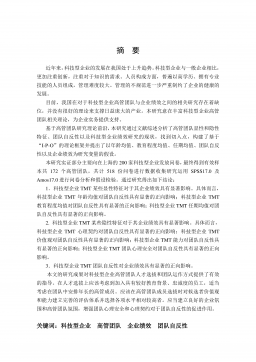
在中国经济和政治的综合背景下,人口红利促进了中国经济增长,它是造就
“中国经济奇迹”的重要因素之一。人口红利为改革开放以来的经济增长提供了
人口比较优势;而改革开放以来的发展政策为吸收与利用人口红利创造了条件。
人口红利具有动态性,它在释放到一定的程度后就会衰减、消失并最终转化为人
口负债。及时地掌握人口红利的发展态势对于经济增长具有重要意义,人口红利
问题可以推动中国经济和社会发展的转型。目前我国总的人口红利仍处于高峰期,
东部地区和中西部地区发展不平衡, 人口红利的实现在东部地区和中西部地区表
现出时差性, 结构性的人口红利正在由东部向中西部地区逐步转移。
本文主要通过分析我国东中西部地区的人口红利现状,结合不同地区人口红
利的发展特点,搜集数据建立计量模型对不同地区的人口红利与经济增长之间的
关系分别进行研究,并在此基础上提出相应的对策建议,以便在人口红利消失前
能够促进经济更好更快的发展。
论文共分为六个部分。
第一章是绪论,主要阐述了本文的选题背景和意义,介绍论文的研究内容和
研究框架,同时对已有的研究文献进行梳理和评述。
第二章是本文的理论基础,本文在对相关概念进行界定的基础上,阐述了人
口红利理论以及人口红利与经济增长关系的理论。
第三章分析我国东中西部人口红利发展现状及存在的问题。本章首先对我国
不同地区的人口红利现状进行分析,并结合刘易斯拐点分析我国人口红利存在的
问题。
第四章对我国东中西部人口红利与经济增长的关系进行实证分析。实证结果
表明东部地区人口红利对经济增长贡献度逐渐减小,中部地区人口红利仍处在高
峰期,而西部地区正走向人口红利暴利期。
第五章在第三、四章的基础上提出相应的对策建议。根据东中西部地区的人
口红利与经济增长之间的特征,本文提出东部地区应走内含式道路,重视人力资
本的积累,强化技术创新以及加快产业结构调整;中西部地区应大力推进城镇化
进程,提高劳动力资源利用率,充分挖掘劳动力转移潜力,加快农业现代化进程。
第六章是对全文的总结,在综合本文主要结论的基础上,对本文的局限性进
行了分析,确定了未来需要进一步深入研究的方向。
关键词:人口红利 经济增长 刘易斯拐点
ABSTRACT
Under China's comprehensive economic and political background, demographic
bonus has promoted the development of China's economic, which is one of the most
significant factors that contribute to “the Chinese economic miracle”. Demographic
bonus has provided population comparative advantage for economic growth since the
reform and opening up of China; Moreover, the development policy since the reform
and opening up has paved the road for the absorption and utilization of demographic
bonus. However, the demographic bonus is dynamic in nature and it will decline,
disappear and eventually be converted into population deficit when it releases to a
certain level. Timely grasping the development trend of demographic bonus is of great
significance for economic growth. Thus, demographic bonus problems can promote the
transformation of China's economic and social development. The general demographic
bonus in China is still at the peak and there is a regional gap of its development between
eastern and midwestern China. The realization of the demographic bonus in eastern and
midwestern China shows a jet lag and structural demographic bonus is gradually
shifting from the East to the Midwest area.
This paper, through analysis of the present situation of demographic bonus in
eastern、central and western regions in China, combining with the current characteristics
of the demographic bonus in different regions, aims to study the relationship between
the demographic bonus and the economic growth of different areas respectively with the
econometric model established in this research with reference to the data collected. For
the existing problems of different regions, we put forward corresponding policy
recommendations so that the demographic bonus could promote better and faster
economic development before it disappears.
This paper can be divided into six chapters:
The first chapter elaborate the background and significance of the selected topic and
reviewed the existing research literatures.
The second chapter introduce related theories, including demographic bonus theory
and economic growth theory.
The third chapter analyzes the current situation and problems. This chapter firstly
makes a evaluation of the demographic bonus in different regions in China. Then it
analyzes the existing problems with reference to the Lewis Turning Point.
The fourth chapter is the empirical analysis of the relationship between economic
growth and demographic bonus in China. This chapter studies the relationship between
economic growth and demographic bonus in eastern, middle and western China
respectively. The empirical results show that in eastern region the contribution of
demographic bonus to economic growth is reducing while the demographic bonus of
central is still at the peak and the western region is moving towards demographic bonus
profiteering.
The fifth chapter puts forward the corresponding countermeasures and suggestions
on the basis of the third and fourth chapters. According to the characteristics of
demographic bonus and economic growth in the east, central and western regions, this
paper suggests that the eastern region should follow the enclosed type, attach
importance to the accumulation of human capital, strengthen technical innovation and
speed up the adjustment of industrial structure; The central and western regions
should actively promote the process of urbanization, raise the utilization ratio of labor
resources, fully excavate potential labor transfer and speed up agricultural
modernization.
The sixth chapter is the summary of this paper. On the basis of comprehensive
conclusions of this paper, it analyzes the limitations of this article and points out the
direction of further studies needed in the future.
Key words: demographic bonus, economic growth, Lewis Turning
Point
目 录
摘要
ABSTRACT
第一章 绪 论 ................................................................................................................ 1
1.1 选题背景和意义 ................................................................................................ 1
1.1.1 选题背景 ................................................................................................... 1
1.1.2 选题意义 .................................................................................................. 1
1.2 文献综述 ............................................................................................................. 2
1.2.1 国外文献综述 ........................................................................................... 2
1.2.2 国内文献综述 ........................................................................................... 5
1.2.3 文献评述 ................................................................................................... 7
1. 3 研究内容和研究方法 ....................................................................................... 8
1.3.1 研究内容 ................................................................................................... 8
1.3.2 研究方法 ................................................................................................... 9
第二章 人口红利与经济增长理论基础 .......................................................................11
2.1 相关概念界定 ....................................................................................................11
2.1.1 人口红利概念界定 ................................................................................ 11
2.1.2 地区划分 ................................................................................................ 11
2.2 人口红利理论 ................................................................................................... 12
2.2.1 人口转变理论 ......................................................................................... 12
2.2.2 人口红利理论 ......................................................................................... 13
2.3 人口红利与经济增长关系理论 ....................................................................... 13
2.3.1 古典经济理论 ......................................................................................... 13
2.3.2 哈罗德—多马模型 ................................................................................. 13
2.3.3 柯布-道格拉斯函数 ................................................................................ 14
2.3.4 新古典经济增长理论 ............................................................................. 14
2.3.5 内生增长理论 ......................................................................................... 16
第三章 我国东中西部人口红利发展现状及存在问题 .............................................. 18
3.1 人口红利现状 ................................................................................................... 18
3.1.1 东部地区人口红利现状 ......................................................................... 18
3.1.2 中部地区人口红利现状 ......................................................................... 19
3.1.3 西部地区人口红利现状 ......................................................................... 20
3.2 人口红利与刘易斯拐点 ................................................................................... 21

3.2.1 刘易斯拐点 ............................................................................................. 21
3.2.2 东中西部人口红利与刘易斯拐点 ......................................................... 22
3.3 存在的问题 ....................................................................................................... 26
3.3.1 劳动力比较优势减小 ............................................................................. 26
3.3.2 东部地区老龄化进程加快 ..................................................................... 26
3.3.3 人口红利存在区域差异 ......................................................................... 26
3.3.4 人口红利回流 ......................................................................................... 27
第四章 我国人口红利与经济增长的实证分析 .......................................................... 28
4.1 指标选取与数据来源 ....................................................................................... 28
4.1.1 指标选取 ................................................................................................. 28
4.1.2 数据来源 ................................................................................................. 28
4.2 模型构建 ........................................................................................................... 29
4.3 实证分析 ........................................................................................................... 30
4.3.1 东部地区 ................................................................................................. 30
4.3.2 中部地区 ................................................................................................. 32
4.3.3 西部地区 ................................................................................................. 35
4.4 结论 ................................................................................................................... 37
4.4.1 东部地区人口红利对经济增长贡献度减小 ......................................... 37
4.4.2 中部地区人口红利仍处在高峰期 ......................................................... 37
4.4.3 西部地区正走向人口红利暴利期 ......................................................... 38
第五章 政策建议 .......................................................................................................... 39
5.1 东部地区政策建议 ........................................................................................... 39
5.1.1 走内含式道路 ......................................................................................... 39
5.1.2 重视人力资本的积累 ............................................................................. 39
5.1.3 强化技术创新 ......................................................................................... 40
5.1.4 加快产业结构调整 ................................................................................. 40
5.2 中西部地区政策建议 ....................................................................................... 41
5.2.1 大力推进城镇化进程 ............................................................................. 41
5.2.2 提高劳动力资源利用率 ......................................................................... 41
5.2.3 充分挖掘劳动力转移潜力 ..................................................................... 41
5.2.4 推进农业现代化进程 ............................................................................. 42
第六章 总结与展望 ...................................................................................................... 43
6.1 结论 .................................................................................................................. 43
6.2 展望 .................................................................................................................. 44
附 录 ............................................................................................................................ 45
参考文献 ........................................................................................................................ 51
在读期间公开发表的论文和承担科研项目及取得成果 ............................................ 56
致 谢 ............................................................................................................................ 57

第一章 绪论
1
第一章 绪 论
1.1 选题背景和意义
1.1.1 选题背景
经济发展与人口的因素总是紧密相联的。人口发展变化与经济的发展变化既
相互促进又相互制约。如人口数量、人口质量与人口结构都是经济发展的影响因
素。年龄结构是人口结构里重要特性之一,人口的生产消费,随着年龄阶段的不
同而不同。那么,不同年龄段的人口对于经济的增长也会有不同影响。通常,社
会负担比与经济增长负相关,社会负担重,社会生产力水平低,抑制经济增长。
我国的经济奇迹、人口奇迹在世界上、历史上都是极其罕见的。中国只用了
短短的几十年就完成了人口的转变,而发达国家却花费了数百年。同时,中国经
济一直以来保持了高速的发展趋势。在这个过程里,我国所依靠的日益丰富的劳
动力资源与日渐降低了的劳动力资源的负担,在经济上取得了丰富的人口红利。
可是,这种比较优势也并不是永远都存在的。
当前,人口增速被有效控制,人口快速增长所带来的经济与环境问题也有所
缓解。同时,我们也应看到,由于我国所实行的计划生育的政策,快速下降的生
育率使得我国人口的再生产类型的转变仅花费了 30 年的时间,在低生育率的阶段
里,人们开始关注人口的结构问题,即人口红利问题。人口红利问题被作为人口
研究的重点问题。随着抚养比重老年抚养比增加,老龄化问题开始出现。未来老
龄化人口形势严峻,人口老龄化与劳动力不足都将会成为来我国经济发展所面临
的重大挑战。
现阶段,我国仍处于人口红利期,因此,如果不能充分抓住人口红利期的优
势,充分抓住我国丰富的劳动力资源,发挥人口红利的最大作用,我们将会失去
利用人口红利促进经济增长这一绝好的机会。
1.1.2 选题意义
我国一直以来享受人口红利对于我国经济发展的促进与推动作用。利用我国
丰富劳动力资源,依靠我国低成本的比较优势增强我国在国际上的竞争力,进而
能够促进我国经济较快的增长。但现阶段,相对比较丰富的劳动力资源优势已经
逐渐的开始消失,这成为了一个不可以逆转的趋势。所以,充分挖掘现阶段我国
人口红利效应的潜力,促进经济快速发展,具有极其重要的意义。人口红利的问
题,可以推动我国经济与社会发展转型。虽我国尚处在人口红利期,但是由于不
同地区发展不平衡,时差性与人口红利回流问题显现。
本文从此角度出发,以东中西部为例来分析我国人口红利与经济增长之间的
关系,以及通过分析我国东中西部地区的人口红利的现状,结合不同地区人口红

摘要:
展开>>
收起<<
摘要在中国经济和政治的综合背景下,人口红利促进了中国经济增长,它是造就“中国经济奇迹”的重要因素之一。人口红利为改革开放以来的经济增长提供了人口比较优势;而改革开放以来的发展政策为吸收与利用人口红利创造了条件。人口红利具有动态性,它在释放到一定的程度后就会衰减、消失并最终转化为人口负债。及时地掌握人口红利的发展态势对于经济增长具有重要意义,人口红利问题可以推动中国经济和社会发展的转型。目前我国总的人口红利仍处于高峰期,东部地区和中西部地区发展不平衡,人口红利的实现在东部地区和中西部地区表现出时差性,结构性的人口红利正在由东部向中西部地区逐步转移。本文主要通过分析我国东中西部地区的人口红利现状,...
相关推荐
-
建筑工程投标文件范本-(格式)VIP免费
 2024-11-22 71
 -
疾病预防控制中心招标文件VIP免费
 2025-01-09 83
 -
体育健身中心施工招标文件VIP免费
 2025-01-09 66
 -
江西丰城电厂及广东从化事故案例分析VIP免费
 2025-03-04 26
 -
钢结构节点图集CAD版(可编辑)VIP免费

 2025-03-04 46
 -
[青岛]精品工程亮点做法图片集(130页)VIP免费
 2025-03-04 43
 -
外墙外保温工程技术规程JGJ144-2019VIP免费
 2025-03-04 22
 -
地铁停车场施工组织设计VIP免费
 2025-03-04 18
 -
项目建设安全管理流程图汇编VIP免费
 2025-03-04 51
 -
特训班学习心得VIP免费
 2025-03-04 18
作者:赵德峰
分类:高等教育资料
价格:15积分
属性:61 页
大小:2.52MB
格式:PDF
时间:2024-11-19
作者详情

相关内容
-
[青岛]精品工程亮点做法图片集(130页)
分类:行业资料
时间:2025-03-04
标签:建筑工程、精品工程、细部节点做法、亮点做法
格式:PPT
价格:5 积分
-
外墙外保温工程技术规程JGJ144-2019
分类:行业资料
时间:2025-03-04
标签:外墙保温、工程、规范
格式:ZIP
价格:2 积分
-
地铁停车场施工组织设计
分类:行业资料
时间:2025-03-04
标签:地铁、场段、施工组织设计
格式:DOCX
价格:3 积分
-
项目建设安全管理流程图汇编
分类:行业资料
时间:2025-03-04
标签:安全管理、流程图
格式:PPT
价格:1 积分
-
特训班学习心得
分类:行业资料
时间:2025-03-04
标签:拓展培训、结构化思考、培训、心得体会
格式:DOCX
价格:1 积分