硫酸铝混凝-QACC吸附去除水中腐殖酸的研究

VIP免费
摘 要
腐殖酸( Humic Acid )是一种广泛存在的天然有机高分子聚合物,大多数淡水中
的含量为 1.0~12 mg∙L-1。自来水厂消毒过程中,腐殖酸与消毒剂发生反应,生成
多种消毒副产物,该类物质进入人体后,对神经系统、生殖系统以及内脏都会造
成潜在危害。研究前体物腐殖酸的去除方法对消毒副产物的控制有着积极作用。
本研究以腐殖酸溶液模拟天然水体,制备新型环保功能材料季铵型阳离子纤
维素(QACC),使用硫酸铝混凝-QACC 吸附工艺去除水中腐殖酸,将其浓度降
低到安全值 1.8 mg∙L-1 以下。首先确定了腐殖酸的测定方法为紫外分光光度法,测
定溶液在 270 nm 波长下的吸光度,通过标准曲线计算腐殖酸的浓度。接下来考察
了混凝剂的种类、投加量、溶液 pH 对腐殖酸溶液混凝效果的影响。并且以脱脂棉为
原材料制成季铵型阳离子纤维素,研究了 QACC 对水中腐殖酸的吸附性能及规律,
探讨吸附机理。
我们发现强效混凝中,无机混凝剂硫酸铝(Al2(SO4)3)和氯化铁(FeCl3)处
理效果优于有机混凝剂聚丙烯酰胺(PAM),再考虑投加量、pH 使用范围和色度
等因素,得出 Al2(SO4)3为最优,其在投加量为 30 mg∙L-1,pH 为6.6 的混凝条件下,
去除率可达到 71 %。通过 QACC 对水中腐殖酸的吸附性能实验,我们发现在
pH=8 、318K 时 , QACC 对腐殖酸的饱和吸附容量为 622 mg∙g-1 ,吸附符合
Lagergren 二级动力学,吸附速率常数随温度升高而升高,其表观活化能为 6.45
kJ∙mol-1,吸附等温模型符合 Langmuir 等温式,为单分子层吸附,吸附腐殖酸的
∆
H
、∆
S
、∆
G 分别为:20.3 kJ∙mol-1,77.8 J∙(mol·K) -1,-4.44 kJ∙mol-1,主要为化学
吸附。
实验继续分析了 QACC 的循环利用问题,结果得出:在室温下,用 0.1
mol∙L-1 的氢氧化钠溶液对 QACC 进行脱附再生,水洗至中性后,再用 0.1 mol∙L-1
的硫酸溶液进行再生,并将处理后的 QACC 继续用于腐殖酸的吸附。进行 8次循
环实验后,QACC 对腐殖酸溶液的吸附容量仍保持在初次使用时吸附量的 95%以
上,说明 QACC 具有良好的机械性能,可再生,能够循环利用,应用前景较为广
阔。
最后,通过分析计算,得出去除水体中腐殖酸的工艺。以 Al2(SO4)3作为混凝
剂,QACC 作为吸附材料,运用此组合工艺来改进饮用水预处理工艺。该方法可
使10 mg∙L-1 的腐殖酸溶液去除到 0.87 mg∙L-1,去除率达到 91.3 %,远低于处理安
全值 1.8 mg∙L-1。

关键词:腐殖酸 混凝 硫酸铝 吸附 季铵型阳离子纤维素
ABSTRACT
Humic Acid (HA) is the nature organic polymer compounds which exist widely. The
amounts of HA in the freshwater are range from 1.0 to 12 milligram per litre. During the
process of the disinfection in the piped water factory, humic acid will react with the
disinfector, as a result, forming a variety of disinfection by products (DBPs) which do
damage to the nervous system, reproductive system and organ of human if DBPs enter
to the body. Therefore, research on the removal of the humic acid matters, leading the
potential toxic to the health of people, play a positive effect on the controls of the DBPs.
The Quaternary ammonium cationic cellulose (QACC) has been synthesized as a novel
environmental functional material to remove humic acid in the natural water. The
natural water was the humic acid solution. And the combination treatment of Aluminum
sulfate coagulation with QACC adsorption was applied to controlling the humic acid
aqueous, aims at minimizing the amounts of humic acid in the water under the critical
value 1.8 mg∙L-1. The determination of HA was determined firstly, which was UV
Sepectroscopy. The way to calculate the concentration of HA is via the humic acid
working curve, charted from the absorbance detected in the 270 nm wavelength. Then
the types of coagulants, dosage of coagulants and pH of solution would be inspected to
study the influence to the coagulation. One the other hand, QACC was prepared based
on the degreasing cotton,using it to adsorb HA so that researching the adsorption law
and adsorption mechanism.
It is found that inorganic coagulants such as Al2(SO4)3 or FeCl3 is better that the
organic coagulants polyacrylamide. The conclusion is that the removal efficiency
reaching at 71% when using the Al2(SO4)3 as coagulant under the condition of dosages
of 30 mg∙L-1, pH value was 6.6. The adsorption property of the adsorbent QACC for
humic acid was explored. The results reveal that the saturation humic acid adsorption
capacity is 622 mg∙g-1 at 318 K and pH value of 8. Furthermore, the adsorption process
is fitted with pseudo-second-order kinetics model and the adsorption rate constant
increases with temperature. The apparent activation energy of the adsorption is 6.45
kJ∙mol-1. The adsorption pattern fitted Langmuir isotherms, which was monomolecular
layer adsorption. ∆H, ∆S and ∆G of the adsorption were 20.3 kJ∙mol-1, 77.8 J∙(mol·K) -1
and -4.44 kJ∙mol-1, respectively. The results show that the adsorption is mainly chemical
adsorption.
The regeneration and recycle of QACC was going on to study to enhance the
utilization ratio. At room temperature, 0.1 mol∙L-1 sodium hydroxide was used for
QACC’s desorption, and 0.1 mol∙L-1 hydrochloric acid solution was for activating
treatment, then the regenerated QACC was reused to adsorb humic acids. The
adsorption capacity of QACC can still reach more than 95% of maxima after 8 times
recycle. Owing to favorable regenerated and recycling ability, QACC has a broad
prospect of application.
Finally, the humic acid water treatment technology was obtained through the
calculation and analysis. And the results is treated by the coagulation-adsorption with
Al2(SO4)3 as coagulants and QACC as adsorbents. The improved drinking water
pretreatment processes come to the removal efficiency at the 91.3% of the humic acid in
the water. And it reduced the amount of humic acid from 10 mg∙L-1 to 0.87 mg∙L-1,
which was rather lower than the critical value of 1.8 mg∙L-1。
Keyword :Humic acid, Coagulation, Aluminum sulfate, Adsorption,
Quaternary ammonium cationic cellulose
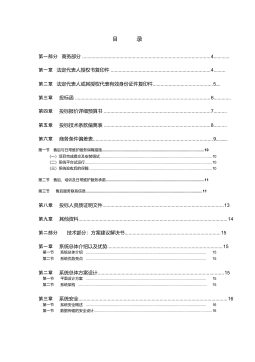
目 录
中文摘要
ABSTRACT
第一章 绪论..............................................................................................................1
§1.1 腐殖酸简介................................................................................................1
§1.1.1 腐殖酸的来源..................................................................................1
§1.1.2 腐殖酸的性质..................................................................................1
§1.1.3 腐殖酸的影响与危害......................................................................2
§1.2 国内外去除腐殖酸的现有技术................................................................3
§1.2.1 强化混凝..........................................................................................4
§1.2.2 氧化法..............................................................................................5
§1.2.3 吸附分离法......................................................................................6
§1.2.4 膜分离法..........................................................................................6
§1.3 硫酸铝概述................................................................................................7
§1.4 季铵型阳离子纤维素概述........................................................................8
§1.5 本课题研究内容及意义..........................................................................10
第二章 实验部分....................................................................................................12
§2.1 实验仪器与材料......................................................................................12
§2.1.1 实验仪器........................................................................................12
§2.1.2 实验药品........................................................................................12
§2.1.3 试剂的配置....................................................................................13
§2.2 季铵型阳离子纤维素的制备..................................................................14
§2.2.1 季铵型阳离子纤维素的制备方法................................................14
§2.2.2 季铵型阳离子纤维素被取代度的测定........................................15
§2.2.3 红外光谱分析................................................................................15
§2.2.4 电镜扫描........................................................................................15
§2.2.5 X-射线衍射表征............................................................................15
§2.3 实验方法..................................................................................................15
§2.3.1 腐殖酸的测定方法........................................................................15
§2.3.2 混凝法去除腐殖酸........................................................................16
§2.3.3 QACC 吸附法去除腐殖酸............................................................17
§2.3.4 腐殖酸的量与 CODMn 的换算.......................................................17
第三章 结果与讨论................................................................................................19
§3.1 UV270 法测定腐殖酸................................................................................19
§3.1.1 腐殖酸的吸收光谱........................................................................19
§3.1.2 pH 的影响......................................................................................20
§3.2 强效混凝去除腐殖酸的影响因素..........................................................21
§3.2.1 混凝剂的种类................................................................................21
§3.2.2 混凝剂投加量................................................................................21
§3.2.3 混凝 pH..........................................................................................22
§ 3.3 季铵型阳离子纤维素对腐殖酸的吸附性能研究.................................24
§3.3.1 季铵型阳离子纤维素结构表征....................................................24
§3.3.2 pH 对吸附容量的影响..................................................................26
§3.3.3 腐殖酸浓度对吸附容量的影响....................................................27
§3.3.4 吸附动力学研究............................................................................29
§3.3.5 表观活化能....................................................................................33
§3.3.6 等温吸附模型................................................................................34
§3.3.7 吸附过程热力学............................................................................36
§3.3.8 吸附机理的探讨............................................................................37
§3.3.9 吸附容量的比较............................................................................38
§3.3.10 QACC 的再生与循环利用..........................................................38
§ 3.4 强效混凝和吸附法联用工艺.................................................................39
第四章 结论............................................................................................................40
参考文献.................................................................................................................42

第一章 绪论
第一章 绪论
§1.1 腐殖酸简介
§1.1.1 腐殖酸的来源
天然有机物(NOM)与合成有机物(SOC)是自然水体中的两类有机污染源。
天然有机物 Natural Organic Materials,指的是如腐殖质,溶解的殖物组织,微生
物分泌物以及动物分泌。合成有机物 Synthetic Organic Materials 指的是农药,工业
废弃物和一些其他的商用化学药剂。天然有机物普遍称作腐殖质,腐殖质可以被
分为三个种类,如表1-1 所示:
表1-1 腐殖质的分类
编号 名称 说明
1腐殖酸(又称胡敏酸)溶于稀碱溶液,易于在酸中沉析出来
2富里酸(又称黄腐酸)即可溶于酸又可溶于碱
3腐殖素(又称胡敏素)既难溶于酸又难溶于碱
腐殖酸类物质占环境水体中总有机物的范围在 50 %到90 %之间,大多数淡
水水体如:江、河、湖泊所含腐殖酸的量在 1.0 mg∙L-1 至12 mg∙L-1 之间。腐殖酸的形
成可以描述为在自然条件下,动植物残骸经过化学、物理及微生物的协同作用,
所形成的一类相当复杂的有机物质的混合物。
§1.1.2 腐殖酸的性质
腐殖酸(Humic Acid,HA)是一种黑色胶体,腐殖酸是由一些复杂物质所组
成的混合物,该类物质结构相仿却不相同。所以腐殖酸的分子量不是个具体的数
值,其高低不一,可描述为在一个范围内。腐殖酸的分子结构的骨架是芳香环链
环链上带有丰富的官能团如羧基、羟基等,还带有部分羰基残片、氨基残片和氨基
糖残片等。腐殖酸是难分解的阴离子型大分子有机物,主要含有碳(C)、氢
(H)、氧(O)、氮(N)、硫(S)这五种基本化学元素,但是由于地区和来源
的不同,腐殖酸的元素组成也存在差异,腐殖酸非纯净物,其分子结构用模型表
示比较合适。图1-1 为Stevenson H A 结构模型示意图。
1

摘要:
展开>>
收起<<
摘要腐殖酸(HumicAcid)是一种广泛存在的天然有机高分子聚合物,大多数淡水中的含量为1.0~12mg∙L-1。自来水厂消毒过程中,腐殖酸与消毒剂发生反应,生成多种消毒副产物,该类物质进入人体后,对神经系统、生殖系统以及内脏都会造成潜在危害。研究前体物腐殖酸的去除方法对消毒副产物的控制有着积极作用。本研究以腐殖酸溶液模拟天然水体,制备新型环保功能材料季铵型阳离子纤维素(QACC),使用硫酸铝混凝-QACC吸附工艺去除水中腐殖酸,将其浓度降低到安全值1.8mg∙L-1以下。首先确定了腐殖酸的测定方法为紫外分光光度法,测定溶液在270nm波长下的吸光度,通过标准曲线计算腐殖酸的浓度。接下来考察...
相关推荐

作者:侯斌
分类:高等教育资料
价格:15积分
属性:54 页
大小:2.84MB
格式:DOC
时间:2024-11-19