奥巴马竞选演讲辞的修辞分析

VIP免费
i
ACKNOWLEDGEMENTS
First of all, I owe the deepest gratitude to my supervisor, Professor Deng Zhiyong. In the
past two and a half years, his systematic and patient instructions have led me into the field of
rhetoric; his strict requirements have made me known to do research work; his benevolent
understanding and kind encouragement have been supporting me to the end. His devotion to
the teaching and research, and his high sense of responsibility sets me a good example to
follow in my future work. I especially appreciate his insightful suggestions and accurate
criticism of the present thesis, from the selection of the topic, the making of the proposal and
the construction of the theoretical framework to the painstaking modification of the draft
versions. Without his guidance and encouragement, this thesis would not be completed.
Meanwhile, I would like to take this opportunity to express my sincere thanks to other
distinguished professors and the staff of College of Foreign Language, namely, Professor Lv
Le, Professor Dai Weihua, Professor Wang Bin, Doctor Han Geling, Doctor Liuqin, etc. My
appreciation also goes to University of Shanghai for Science and Technology which has
offered me valuable resources of teachers, lectures, references and academic nourishments,
giving me much inspiration to better my study.
I would like to thank my classmates and roommates who have given me help and
encouragement. The friendship with them has helped me pass the difficult times of my study.
And these beautiful memories will stay in my mind forever.
Finally, I would like to express my heartfelt gratitude and respect to my family members.
My parents, my brother and my sisters have been supporting me through all my school life. It
is their love and constant encouragement that give me strength and confidence to make my
way in life. Special thanks give to my boyfriend, whose love and support have accompanied
me more than four years. I wish we’ll have a happy future.
ii
ABSTRACT
On November 4, 2008, a Kenyan-African-American named Barack Obama, aged 47,
federal senator from the state of Illinois, was elected the 44th American president in its 56th
presidential election. Since Obama’s campaign speeches have played a significant role in his
long course of campaign, it’s essential to study them. Up to now, to my limited knowledge,
there is only a little research on Obama’s campaign speeches from the rhetorical angle. And
this thesis tends to research the rhetorical operation of the speeches, especially the persuasion
in the speeches and the key factors for him to get the last laugh.
In this thesis, the author adopts mainly the research results of classical rhetoric and
American New rhetoric and makes them as the rhetorical framework of this thesis for
persuasive analysis of Obama’s campaign speeches. First of all, this thesis employs Lloyd
Bitzer’s rhetorical situation theory, which is composed of the exigence, the audience and the
constraints, to elaborate the inevitability and the factors needed to be considered in Obama’s
campaign speeches. Then it goes to the highlight of this thesis—the rhetorical operation of his
campaign speeches including two domains: identification through rhetorical content and
rhetorical form. The theories mainly are identification and the artistic proofs, etc. The former
studies the embodiment of Burke’s identification (identification by sympathy, identification
by antithesis and identification by inaccuracy), syncretized with Aristotle’s artistic proofs
(ethos, pathos and logos) and Toulmin model of argument in his campaign speeches. The
latter involves identification by conventional form, identification by progressive form and
identification by repetitive form.
Through a rhetorical analysis of Obama’s campaign speeches, we find out that one of the
most important reasons for Obama’s success is the skillful persuasion in his campaign
speeches. The adoption of western rhetoric in the speeches can gain the audience’ trust with
his characters, move the audience with emotions and persuade them with reasons. Obama’s
campaign speeches are elegant and eloquent and have a strong power of persuasion to realize
the identification between Obama and the audience. This analysis can help the English
learners have a better study on the rhetorical strategies adopted in the political speeches, raise
their ability on the application of rhetoric and provide them with a new critique perspective
for the discourse analysis.
Key Words: campaign speeches, rhetorical situation, persuasion, identification
iii
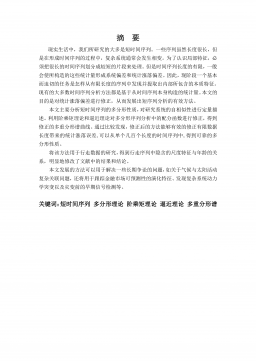
摘 要
2008 年11 月4日,来自伊利诺伊州的联邦参议员,47 岁的肯尼亚非裔美国人贝拉
克.奥巴马在第 56 届总统选举中成功当选为美国第 44 任总统。奥巴马的竞选演讲辞在其
竞选过程中起着关键的作用,所以研究它们是很有必要的。据作者所知,目前关于奥巴
马的演讲辞的修辞分析还很少,因此本论文试图从修辞的角度来分析奥巴马演讲辞的运
作过程,特别是奥巴马竞选演讲辞的劝说功能。
在这篇论文中,作者通过汲取古典修辞学,美国新修辞学等重要理论研究成果,并
以此作为本文的修辞分析理论框架来分析奥巴马演讲辞的劝说功能。本文首先运用比彻
尔的“修辞情景”论的三个成分:紧急状态、在决定和行动上受限制的听众和制约因素详
细阐述了奥巴马竞选演讲辞产生的必然性和和应考虑的各种因素。接下来即本文的重点
—奥巴马竞选演讲辞的修辞运作过程,它包括两部分:修辞内容和修辞形式的同一。前
者采用伯克的同一理论(同情认同、对立认同、误同),并融合了亚里士多德的三种诉诸
(人品诉诸、情感诉诸、逻辑诉诸)以及图尔明论证模式来分析奥巴马演讲辞中的劝说
功能。后者是从伯克的规约形式认同,前进形式认同和重复形式认同三方面来分析其竞
选演讲辞。
通过对奥巴马竞选演讲辞的修辞分析,我们发现奥巴马之所以能取得成功,其中的
一个最重要原因就是其竞选演讲辞成功地实现了劝说功能。奥巴马在美国的竞选演讲成
功地运用西方修辞学理论从人品上取得听众的信任、从情感上去感动听众、从理性上说
服听众。其语言丰富、优美并具有极强的劝说性,成功地实现了演讲者与受众的认同。
此研究可以帮助英语学习者更好的研究政治演讲语篇中所采用的修辞策略,提高修辞运
用能力,为语篇分析提供新的批评视角。
关键词:竞选演讲辞 修辞情境 劝说 同一
iv
LIST OF FIGURES
Fig. 3.1 Construction of premises of enthymeme………………………………………. 23
Fig.3.2 Relationship among the three proofs……………………………………………25
Fig.3.3 Relationship between identification and enthymeme………………………….. 30
Fig.3.4 Identification and enthymeme implied in an advertisement of insurance……....32
Fig.4.1 Human needs hierarchy…………………………………………………………40
Fig.4.2 Application 1 of identification by sympathy…………………………………... 41
Fig.4.3 Basic structure of Toulmin model of argument…………………………………42
Fig.4.4 A typical example of Toulmin model of argument……………………………...43
Fig.4.5 Application 1 of Toulmin model of argument…………………………………..44
Fig.4.6 Application 2 of identification by sympathy……………………………………45
Fig.4.7 Application 1 of identification by antithesis…………………………………….48
Fig.4.8 Application 2 of identification by antithesis…………………………………….48
Fig.4.9 Application 2 of Toulmin model of argument…………………………………...49
Fig.4.10 Application 3 of identification by antithesis…………………………………...50
Fig.4.11 Application 1 of identification by inaccuracy………………………………….53
Fig.4.12 Application 3 of Toulmin model of argument………………………………….54
Fig.4.13 Typical pattern of Obama’s campaign speeches………………………….........56
v
CONTENTS
ACKNOWLEDGEMENTS ......................................................................................................i
ABSTRACT .............................................................................................................................. ii
摘 要 .......................................................................................................................................iii
LIST OF FIGURES .................................................................................................................iv
CONTENTS .............................................................................................................................. v
Chapter One Introduction ....................................................................................................... 1
1.1 Background of the Study .............................................................................................. 1
1.2 General Purpose of the Study ....................................................................................... 2
1.3 Methodology and Data Collection ................................................................................ 3
1.4 Structure of the Thesis .................................................................................................. 3
Chapter Two Literature Review ..............................................................................................5
2.1 The American Presidential Campaign Speeches and Obama’s Campaign Speeches ... 5
2.1.1 Introduction of American Presidential Campaign Speeches ................................... 5
2.1.2 Introduction of Obama’s Campaign Speeches ........................................................ 6
2.1.2.1 Obama Vs McCain: Change Vs Experience .....................................................6
2.1.2.2 Social Background of Obama’s Campaign Speeches ....................................... 7
2.1.2.3 Characteristics of Obama’s Campaign Speeches ..............................................8
2.2 Previous Studies on Obama’s Speeches ........................................................................9
2.2.1 Research on Obama’s speeches abroad ................................................................... 9
2.2.2 Research on Obama’s speeches at home ............................................................... 10
2.3 The Present Research ..................................................................................................12
Chapter Three Theoretical Framework ............................................................................... 13
3.1 An Overview of Rhetoric ............................................................................................ 13
3.1.1 Definition of Rhetoric ........................................................................................... 13
3.1.2 Function and Scope of Rhetoric ............................................................................ 15
3.2 Lloyd Bitzer’s Rhetorical Situation ............................................................................16
3.2.1 Nature of Rhetorical Situation ...............................................................................17
3.2.2 Constituents of Rhetorical Situation ......................................................................18
3.3 Rhetor and Audience Analysis .................................................................................... 20
vi
3.4 Aristotle’s Artistic Proofs ........................................................................................... 21
3.5 Burke’s Identification ................................................................................................. 25
3.5.1 Notion of Identification ......................................................................................... 25
3.5.2 Dichotomy of Identification .................................................................................. 27
3.5.3 Relationship among Identification, Artistic Proofs and Enthymeme .................... 29
3.6 Summary .....................................................................................................................32
Chapter Four Obama’s Campaign Speeches through Rhetorical Perspective .................33
4.1 Rhetorical Nature of Obama’s Campaign Speeches ................................................... 33
4.2 Rhetorical Situation of Obama’s Campaign Speeches ................................................34
4.2.1 Exigence ................................................................................................................ 34
4.2.2 Audience ................................................................................................................36
4.2.3 Constraints .............................................................................................................37
4.3 Identification Strategy in Obama’s Campaign Speeches ............................................ 38
4.3.1 Identification by Rhetorical Content ..................................................................... 39
4.3.1.1 Identification by Sympathy .............................................................................39
4.3.1.2 Identification by Antithesis ............................................................................. 46
4.3.1.3 Identification by Inaccuracy ........................................................................... 52
4.3.2 Identification by Rhetorical Form ......................................................................... 55
4.3.2.1 Identification by Conventional Form ..............................................................56
4.3.2.2 Identification by Progressive Form .................................................................57
4.3.2.3 Identification by Repetitive Form ...................................................................59
4.4 Summary .....................................................................................................................60
Chapter Five Conclusion ....................................................................................................... 61
5.1 A Brief Summary of the Thesis ...................................................................................61
5.2 Limitations and Suggestions for Further Research .....................................................62
Appendice ................................................................................................................................64
BIBLIOGRAPHY .................................................................................................................. 95
在读期间公开发表的论文 ......................................................................................................98

Chapter One Introduction
1
Chapter One Introduction
1.1 Background of the Study
In the present-day social life, every four years’ American presidential election has
always drawn our great attention. It not only signifies the coming of a new president or
a new government, but also exerts great influence on the economy, culture and even
ideology of the whole country. On November 4, 2008, a Kenyan-African-American
named Barack Obama, aged 47, was elected the 44th American president in its 56th
presidential election. With no doubt,this remarkable event in the United States is a hot
topic throughout the world. Therefore, scholars from different fields put up a heated
discussion around Obama’s successful speeches through various angles such as
economy, philosophy, race and so on.
Since this thesis is going to study Obama’s campaign speeches from a rhetorical
perspective, it is indispensable to elaborate the relationship between rhetoric and speech.
According to Aristotle, rhetoric is primarily concerned with oral discourse. So people
attached much importance to the skills of speech at that time. Possessing eloquence was
considered to be the prerequisite for one to be outstanding in the social life. For this
reason, people always focused on how to cultivate the ability of persuading the
counterpart with powerful and effective discourse. On the whole, the traditional rhetoric
laid stress on speech. In the 1920s, scholars began to pursue new approaches to study
speech, casting away the traditional view that a speech was a way of imparting the
existed knowledge. In the 1950s and 1960s, apart from the linguists and philosophers,
lots of researchers from other fields took interest in speech: theologists explored the oral
myths; medical scientists worked over how the doctors communicate with the patients;
historians devoted themselves into oral stories or oral history. Meanwhile, American
New rhetoric provided people with new understandings of rhetoric. The focus of
rhetoric was changed from the study of speaker’s intentions to the interpretation of
audience. Also, the critique of discourse was no longer limited to the rules given by the
early philosophers because new environment and methods had established us a
completely open system.
As for American political speeches, they are not only the research subjects for
A Rhetorical Analysis of Obama's Campaign Speeches
2
politicians but also for philosophers and rhetoricians. The presidential candidates, as the
political participants, are incontestable to achieve the final success through the
communication with voters. The politics of America is democratic, so it is the voters
who have the right to decide which presidential candidate has the qualification to be
their president. The most direct way for the presiential candidates to convince and move
the voters is to deliver campaign speeches. In this process, they are inevitable to apply
the rhetorical strategies to persuade the audience. From a rhetorical perspective, these
rhetorical strategies adopted in the American campaign speeches can help the candidates
gain the audience’ trust with their characters, move the audience with emotions and
persuade them with reasons.
Until now, there is only a little research on Obama’s speeches from a linguistic
perspective, particularly from a rhetorical angle. Some articles about his speeches are
studied with a systemic-functional approach. Others are investigated with a stylistic
approach at different levels. Articles studing from a rhetorical perspective have hardly
done this type of textual analysis satisfactorily because they are limited to the figures of
speech. Hence, a brand-new rhetorical approach to study his speeches is our calling.
1.2 General Purpose of the Study
The whole study of theis thesis focuses on how Obama’s campaign speeches are
operated from a rhetorical perspective. It’s going to adopt Lloyd Bitzer’s rhetorical
situation theory which serves to dicover the motivations which give birth to Obama’s
campaign speeches. Then it’s a persuasion analysis of Obama’s campaign speeches with
Kenneth Burk’s identification, a powerful force of explication, syncretized with
Aristotle’s three artistic proofs and Toulmin model of argument.
The significance of the present study lies in both theoretical and practical aspects.
Theoretically, it introduces a new approach—Burke’s new rhetoric into the study of
Obama’s campaign speeches. It involves how Obama takes full advanctage of Burke’s
identification from both the rhetorical content and rhetorical form to persuade the
audience on the basis of the common grounds between him and the audience. Also,
Aristotle’s three artistic proofs, especially the enthymeme, are employed to investigate
the rhetorical operation of Obama’s campaign speeches. Practically, this thesis aims to
help the English learners have a better understanding of rhetorical strategies and
Chapter One Introduction
3
rhetorical motivations applied in the political speeches, raise their rhetorical abilities,
and shed light on a new critique perspective of discourse analysis.
1.3 Methodology and Data Collection
This thesis proposes to conduct a qualitative analysis of Obama’s campaign
speeches from a rhetorical angle. The author mainly adopts the above mentioned
research results of classical rhetoric and American New rhetoric to analyze the
rhetorical operation of Obama’s campaign speeches.
Analysis of Obama’s campaign speeches will be mainly on text discourse from
various kinds of websites and books. Though he has delivered many speeches along his
long course of campaign, the author only selects four representative ones among
Obama’s campaign speeches: the campaign speech in Iowa, the campaign speech in
Phildelphia, the campaign speech in Ohio, and the campaign speech in Florida.
1.4 Structure of the Thesis
The thesis is composed of five chapters:
Chapter One is an overview of present study of the subject. The background of the
study is firstly stated, followed by the general purpose of the study. And then the
methodology and data collection are discussed.
Chapter Two gives a simple introduction of American presidential campaign
speeches, especially the characteristics of them. Next, it goes to the contrast between
Obama and McCain: change vs experience, the social background and three distinctive
characteristics of Obama’s campaign speeches. What’s more, the previous studies on
Obama’s speeches are expounded. At last, it’s a description of the present research, in
which the author introduces a new rhetorical approach, that is, the identification in
Obama’s campaign speeches.
Chapter Three, in the first place, introduces the theoretical preliminaries of
different notions of rhetoric including definition, function and scope. After that, the
discussion goes to Bitzer’s rhetorical situation theory, rhetor and audience analysis,
rhetorical strategies including Aristotle’s artistic proofs and Burk’s identification. They
serve together as the basic theoretical ground for a rhetorical analysis of Obama’s
A Rhetorical Analysis of Obama's Campaign Speeches
4
campaign speeches.
Chapter Four puts emphasis on the rhetorical analysis of Obama’s campaign
speeches. The author mainly elaborates the application of the rhetorical theories
mentioned in chapter three. The core of this part is to analyze how Obama applies the
rhetorical strategies, namely identification, artistic proofs and Toulmin model of
argument in his campaign speeches. Therefore, a comprehensive understanding of the
successful persuasion in his campaign speeches is achieved.
Chapter Five is devoted to the conclusion of this thesis. It covers the research
results of the present study and the summary of the main points of practical implications
for the discourse analysis. The limitations of the study and future efforts to be made are
also pointed out in this part.

摘要:
展开>>
收起<<
iACKNOWLEDGEMENTSFirstofall,Iowethedeepestgratitudetomysupervisor,ProfessorDengZhiyong.Inthepasttwoandahalfyears,hissystematicandpatientinstructionshaveledmeintothefieldofrhetoric;hisstrictrequirementshavemademeknowntodoresearchwork;hisbenevolentunderstandingandkindencouragementhavebeensupportingmet...
相关推荐

作者:侯斌
分类:高等教育资料
价格:15积分
属性:103 页
大小:809.53KB
格式:PDF
时间:2024-11-19