电子产品广告语篇的同一修辞策略分析

VIP免费
ii
ABSTRACT
Based on Kenneth Burke’s theory of identification, this thesis is intended to
provide an identificational analysis of electronics advertising, the purpose of which is
to reflect the rhetorical process of the electronic advertisements and the way they
identify with the audience through rhetorical content and form.
As the theoretical basis that runs through the whole thesis, the Burkean notion of
identification makes the development of the thesis possible. Identification is the further
study of the traditional rhetorical theories, which functions as both the means and the
end of the Aristotle’s three appeals (pathos,ethos and logos), enthymeme and
Toulmin’s theory of argumentation. Advertising is a typical rhetorical activity in which
identification also works as its means and its ultimate goal. This thesis attempts to
establish the rhetorical model of advertising identification which reflects the rhetorical
relationship among advertising participants and reveals the rhetorical process of
advertising by the investigation of the active communication involving the
participation and dynamic cooperation of rhetorical formulation and rhetorical
reception.
Based on the theoretical preliminaries and the rhetorical model of advertising
identification, the thesis aims to analyze how the identification is achieved in the
electronics advertising through the rhetorical content and rhetorical form. So the
rhetorical formulation and rhetorical reception are achieved by choosing the rhetorical
content to be “consubstantial” with their readers via traditional persuasive means, and
new rhetorical “identification by antithesis”, “identification by inaccuracy”. Content
cannot live without form. So the rhetorical form plays an equally important role in
achieving identification between the advertiser and the audience. The rhetorical form
in this thesis is mainly represented by the conventional form, progressive form,
repetitive form and minor form, all of which make the advertisements more impressive
by their unique forms and stimulate the audience’s excitement and enjoyment of their
aesthetic pleasure.
The identificational analysis of the electronics advertising indicates that
advertisements cannot achieve the desired effects without identification as it is not only
the ultimate goal but also the means for the advertising. The thesis also concludes that
the electronic advertisements are not merely to convey pieces of information by using
iii
the accurate and objective language to describe the characteristics of the targeted
products, but try to identify the audience with the embedded meaning in the products
and appeal to the audience’s emotional feelings with vivid wording, elegant tone,
various styles, profound meanings, rich implication and association which stir the
audience’s imagination and stimulate the appreciation for the products and finally
identification with the advertisements. Thus, the audience in the electronics
advertisements plays an active role in the cognitive processing and interpretation of the
advertised products instead of being a passive receiver. Meanwhile, the present study
also has practical implication for business English writing and can help the student
writer become more audience-oriented.
Key Words: Identification, Rhetoric, Electronics advertising
iv
摘 要
本文主要基于伯克的同一修辞理论这一崭新的研究视角,对电子产品广告进
行同一修辞性研究,旨在揭示电子产品广告语篇的修辞过程以及其如何通过语篇
内容和形式达到广告作者与读者之间的同一。
伯克的同一修辞理论作为贯穿全文的理论红线,为论文的开展提供了可能。
同一修辞性研究是古典亚里士多德三个诉诸理论(感性诉诸、人品诉诸、理性诉
诸)的新发展,与三个诉诸理论、修辞三段论、图尔民的论说理论的共通之处在
于其劝说手段和劝说目的都是同一。广告作为一种典型的修辞活动,其修辞手段
和修辞目的也是同一。本文试图建立一个广告语篇修辞过程的同一修辞模式,通
过对广告语篇作者的修辞表达与潜在客户的修辞接受以及其各项交流活动的研
究,反映广告参与者之间的修辞关系并揭露广告语篇的修辞过程。
基于修辞理论基础及广告语篇同一修辞模式,本文应用部分对电子产品广告
进行同一修辞策略分析,并从修辞内容和修辞形式出发对其进行修辞研究。电子
产品广告作者通过传统的劝说手段和新修辞学的“对立”与“误同”,选择修辞内
容,建立与读者的同一。形式与内容不可分割,相互依存。形式跟内容一样,能
促成读者与作者之间的同一。不同的修辞形式给读者不同美的感受,引导读者对
语篇进行关联信息加工,从而建立作者与读者之间的同一。
电子产品广告的同一修辞研究表明没有同一广告便不能达到预期效果,因为
同一既是广告修辞的手段同时又是其最终目的。电子产品语篇分析表明广告不仅
运用准确、稳重和客观的语言陈述商品的特性,给读者提供相关产品信息,而且
同时运用生动形象的语言,优雅的语调,多样化的文体,深刻的内涵诉诸广告受
众的情感,从而引导读者达成与作者和电子产品之间的同一。因此广告读者不是被
动地接受广告信息,而是积极地对广告语篇进行关联信息加工,最终建立与作者
的同一。同时本项研究对商务英语写作有一定的实践指导意义,可以帮助学生在
商务英语写作时更好的适应读者。
关键词:同一 新修辞学 电子产品广告语篇
v
List of Figures
Fig. 3.1: Basic Structure of Typical Argument……………………………………….21
Fig. 3.2: Toulmin Model of Olympus Ad…………………………………………….22
Fig. 3.3: Identification Works as both the Mean and the End………………………..28
Fig. 3.4: Advertising Identification in Rhetorical Formulation……………………....31
Fig. 3.5: Advertising Identification in Rhetorical Reception………………………....32
Fig. 3.6: Model of Advertising Identification…………………………………………33
Fig. 4.1: Identification Analysis of Advertising Text………………………………….37
Fig. 4.2: Human Needs Hierarchy…………………………………………………….41
Fig. 4.3: Identification via Toulmin’s Model of Argumentation………………………52
Fig. 4.4: Identification via Argumentation in DAKIN Air Conditioner………………54
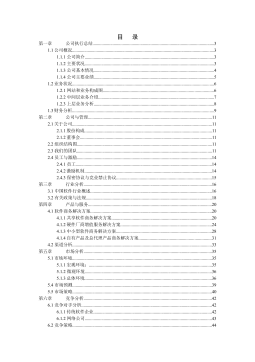
Contents
Acknowledgements ........................................................................................................... i
ABSTRACT ..................................................................................................................... ii
摘 要 .........................................................................................................................iv
List of Figures .................................................................................................................. v
Chapter One Introduction .......................................................................................... 1
§1.1 Background of the Study ................................................................................... 1
§1.2 Methodology and Data Description ................................................................... 2
§1.3 Structure of the Thesis ....................................................................................... 2
Chapter Two Literature Review ....................................................................................... 5
§2.1 Perception of Advertising .................................................................................. 5
§2.2 Previous Studies on Advertising ........................................................................ 6
§2.2.1 Stylistic Approach .................................................................................... 6
§2.2.2 Systemic-Functional Approach ................................................................ 6
§2.2.3 Pragmatic Approach .................................................................................7
§2.2.4 Semiotic Approach ...................................................................................7
§2.2.5 Communicative Approach ....................................................................... 8
§2.2.6 Rhetorical Approach ................................................................................ 9
§2.3 A Critical Review of the Previous Approaches ................................................ 11
§2.4 The Present Approach ...................................................................................... 12
Chapter Three Theoretical Preliminaries ........................................................................ 13
§3.1 Perception of Rhetoric ..................................................................................... 13
§3.2 The Aristotelian Rhetoric ................................................................................. 14
§3.2.1 Ethos ...................................................................................................... 15
§3.2.2 Pathos ..................................................................................................... 15
§3.2.3 Logos ......................................................................................................16
§3.2.3.1 Definition of the Enthymeme ......................................................16
§3.2.3.2 Features of the Enthymeme ........................................................ 19
§3.2.3.3 Toulmin’s Theory of Argumentation ...........................................20
§3.3 Burkean Notion of Identification ..................................................................... 22
§3.3.1 Identification .......................................................................................... 23
§3.3.2 Related Concepts of Identification .........................................................24
§3.3.2.1 Substance .................................................................................... 24
§3.3.2.2 Consubstantiality .........................................................................25
§3.3.2.3 Persuasion ................................................................................... 26
§3.4 Identification as the Means and the End .......................................................... 27
§3.5 A Rhetorical Model of Advertising Identification ........................................... 28
§3.5.1 Two-way Identification: Formulation and Reception ............................ 28
§3.5.1.1 Identification in Rhetorical Formulation .................................... 30
§3.5.1.2 Identification in Rhetorical Reception ........................................ 31
§3.5.2 Model of Advertising Identification .......................................................32
§3.6 Summary .......................................................................................................... 33
Chapter Four Analysis of Identificational Strategies in Electronics Advertising ...........34
§4.1 Contextual View of the Electronics Advertising .............................................. 34
§4.2 The Rhetorical Nature of Electronics Advertising ...........................................35
§4.3 The Procedure of Identification Analysis .........................................................36
§4.4 Identification via Rhetorical Content in Electronics Advertising .................... 39
§4.4.1 Identification via Aristotle’s Three Appeals ...........................................39
§4.4.1.1 Identification via Pathos ............................................................. 39
§4.4.1.2 Identification via Ethos ............................................................... 43
§4.4.1.3 Identification via Logos .............................................................. 47
§4.4.1.3.1 Identification via Enthymeme ..........................................47
§4.4.1.3.2 Identification via Toulmin Model of Argumentation ....... 49
§4.4.2 Identification via Antithesis ................................................................... 55
§4.4.3 Identification via Inaccuracy ..................................................................57
§4.5 Identification via Rhetorical Form in Electronic Advertising ..........................59
§4.5.1 Identification via Conventional Form ....................................................59
§4.5.2 Identification via Progressive Form .......................................................61
§4.5.3 Identification via Repetitive Form ......................................................... 63
§4.5.4 Identification via Minor Forms .............................................................. 65
§4.6 Summary ....................................................................................................... 66
Chapter Five Conclusion ........................................................................................... 68
§5.1 Brief Summary of the Study ............................................................................ 68
§5.2 Implication for Teaching Business English Writing ........................................ 70
§5.3 Limitations and Suggestions for Future Study .................................................70
BIBLIOGRAPHY .......................................................................................................... 72
在读期间公开发表的论文 ............................................................................................ 76

Chapter One Introduction
1
Chapter One Introduction
§1.1 Background of the Study
Advertisements are omnipresent, on televison, radio and the Internet, in
newspapers, magazines and mailboxes. They not only have great effect on our daily
life, but also exert great influence on the economic, cultural, and even ideological
aspects of our society. The same are with the electronic advertisements which are the
products of the digital times and can naturally attract much attention of the human
beings.
Due to the pervasiveness of advertisements and their important role in modern
society, advertising has long become a popular subject in academic community and has
been approached from a wide range of disciplines like communication and mass media,
marketing and promotion, consumer psychology and so on. With regard to advertising
discourse, stylistics, pragmatics, systemic-functional grammar and semiotics have all
made their great contributions and shed valuable light on the different aspects of the
total phenomenon. However, up to now, to my limited knowledge, there is little
research on advertisement text, especially in the electronic advertisements in light of
new rhetorical theory. Even some researchers up to now have hardly done this type of
textual analysis satisfactorily in that they have confined themselves to exploring
specific rhetorical features and the appealing strategies in advertising text. This is why
I would like to choose this subject for my study.
The study of rhetoric is a field which has traditionally been concerned with the
use of reasoned discourse to persuade. As an art of persuasion, rhetoric arms
advertisers with useful means to arrive at their ends. Classical rhetoric is instructive
when it concerns how admen persuade their audience by rational, emotional and ethic
appeals. However, its kernel concept of “persuasion” implies an unequal relationship
of the participants, and audience is the only target to be persuaded. It seems inadequate
to deal with modern advertising. So the current study, based on the theory of New
Rhetoric as “identification”, attempts to make a relatively new investigation into the
rhetorical process of modern advertisement text and to suggest how modern
advertising achieves its rhetorical effect through skillful employment of linguistic
resources.
The theoretical framework of this thesis is mainly focused on the Burke’s
An Identification Approach to the Electronics Advertising
2
identification theory. Rhetoric, in Aristotle’s terms, is the faculty of discovering the
available means of persuasion in the particular case. To persuade his audience, a
speaker draws on “available means” as substance of identification to establish rapport
between them. Burke’s theory of new rhetoric attaches importance to identification.
Identification-oriented stance is explicit in Burke’s remarks, “You persuade a man only
insofar as you can talk his language by his speech, gesture, tonality, order, image,
attitude, ideas, identifying your ways with his” (Burke, 1969: 32). In light of the
rhetorical situation in advertising communication, the ultimate goal is to persuade the
consumer to buy the product by the means of identification. Identification in
advertising is not only the means but also the end of the admen. Apart from the key
theory of identification, the classical rhetorical theories such as Aristotle’s three
appeals, Toulmin’s theory are also made use of here. And we have found that the
notion of identification serves as the common ground of these theories. We will attempt
to figure out the usual operating mechanism between them. The identification-oriented
and cooperation-directed new rhetoric meets the challenge of modern advertising and
provides a new approach especially to the electronics advertising discourse studies.
§1.2 Methodology and Data Description
This thesis proposes to conduct qualitative analysis in the light of “identification”,
the core notion of the Kenneth Burke’s new rhetoric. As the focus of analysis will be
on language, the verbal texts of the magazine advertisements and newspaper
advertisements are given the priority. Samples of all the electronics advertisement
discourses are collected from well-known and widely-circulated magazines and
newspapers, like News Week, Time and Readers’ Digest etc., to build a small pool of
language data. In order not to be left behind and keep pace with the newly developed
technologies, most of the electronics advertisements are taken from the latest
magazines, for the electronic products are almost daily updating with the soaring
development of the high-tech and digital technologies.
§1.3 Structure of the Thesis
As the basic theories of rhetoric, the Aristotelian theory, Toulmin’s theory and
Chapter One Introduction
3
Burkean theory are the three important theories which are closely related with each
other. The present study points out that the Kenneth Burke’s notion of “identification”
is the core of New Rhetoric and a supplement to and development of old rhetoric,
serving as the means and the end of the other two theories. At the same time this thesis
tries to analyze the electronics advertising from the identificational perspective and
establish a rhetorical model of advertising identification. With such a new approach,
this research can shed light on discourse studies in modern times. The study will focus
on the how the identification works especially in electronics advertising.
The thesis consists of five chapters:
Chapter One is a general introduction to the current advertisement study. The
background and objectives are stated, the methodology and data to be used are
described. Then it comes to the final part of this chapter, an overview of the structure
of the thesis.
Chapter Two explores the perception of advertising and provides a literature
review of the different approaches used for the advertising discourse studies, including
the approaches of stylistics, system-functional grammar, pragmatics, semiotics,
communication, and rhetorical and their limitations are also pointed out here.
Following the previous studies is a brief description of the present approach, in which
the author introduces a new rhetorical approach, that is, an identificational analysis of
the electronics advertising, helping us to have a good understanding of the electronics
advertising discourses.
Chapter Three investigates the theoretical preliminaries of the different notions of
rhetoric which are exemplified as the Aristotelian theory, the Toulmin theory and the
Burkean notion of identification, among which some common ground exists there.
The Burkean notion of identification serves as the means and the end of the other two
theories and which functions as the theoretical basis of the identificational analysis of
the electronics advertising. The following is the construction of the rhetorical model of
advertising identification based on the proposition that rhetorical process involving
both rhetorical formulation and rhetorical reception.
Chapter Four is devoted to an identificational approach to electronics advertising.
At the beginning of this chapter the contextual view of the electronics advertising is
analyzed. By doing so the stylistic characteristics of the electronics advertising is made
known to us and its persuasiveness leads us naturally to the research of the rhetorical

摘要:
展开>>
收起<<
iiABSTRACTBasedonKennethBurke’stheoryofidentification,thisthesisisintendedtoprovideanidentificationalanalysisofelectronicsadvertising,thepurposeofwhichistoreflecttherhetoricalprocessoftheelectronicadvertisementsandthewaytheyidentifywiththeaudiencethroughrhetoricalcontentandform.Asthetheoreticalbasis...
相关推荐

作者:牛悦
分类:高等教育资料
价格:15积分
属性:81 页
大小:735.02KB
格式:PDF
时间:2024-11-19