13X沸石分子筛整体成型太阳能吸附剂吸附性能研究

摘 要
13X 沸石分子筛是众多类型人工合成沸石的一种,是对环境友好的绿色自然
工质对,其强大的孔道体系使其具备较好的物理性吸附能力。本研究的主要内容
就是对 13X 沸石分子筛在低真空的环境下测试其对制冷剂的吸附/脱附能力,简而
言之,本实验原理为由于吸附剂在脱附/吸附制冷剂的过程导致了内部气压发生变
化,制冷剂发生冷凝/蒸发的相变,从而出现制热/制冷的现象。
本研究的实验基础是需要满足低真空的密封测试环境,因此设计并搭建了一
台名为“新型测试整体成型太阳能制冷吸附剂吸附性能的装置”,该装置由不锈钢
密封焊接而成,包括真空测试电阻规、真空阀门、真空连接头、真空硅胶管等部
件。该装置经过抽真空处理后,最低真空度可达 200Pa(与真空泵的抽真空能力有
关),在关闭阀门空置 24 小时后,其真空度变量<10Pa,即真空度偏差控制在 5%
以内,具备良好的真空密封环境,可用于测试不同配比的 13X 整体成型沸石分子
筛吸附剂样品对于制冷剂(又称吸附质)的脱附/吸附性能。此外,试验台还包括
高温烘箱、恒温油浴、水泵、真空测试仪、量筒、热电偶、Keithley 温度数据采集
器等设备,在实验过程中可记录温度、真空度、冷凝器/蒸发器内的水量等数据,
以便试验后期的实验结果分析比较。本研究以 13X 沸石分子筛原粉为吸附剂,逐
量添加粘结剂,制作了 19 种整体成型的吸附剂样品。制定相应的实验方案,在相
同实验工况下对 19 种样品进行测试,得到数据;改变脱附温度等变量,挑选典型
实验样品对其进行测试,得到多组数据。
其次,实验开始前,需要利用真空泵对系统内部进行抽真空,经试验发现,
真空度越低脱附/吸附效果越好,实验周期也可适当缩短,但真空度偏低会在一定
程度上影响吸附剂内部的传热传质效果。在每个样品试验前,需要对样品连接试
验台后进行预加热并循环多次抽真空,使其滞留在吸附剂内部的空气全部抽取出
来,直至真空度数值不变,否则无法达到要求的低真空环境。另外,本研究还选
取了典型的吸附剂样品,改变其脱附时的热环境温度进行测试,发现在脱附温度
达到 200℃时,样品能够基本实现完全脱附,从而脱附/吸附效果也能达到该样品
的最佳状态;在脱附过程中,取室内常温条件下的水作为冷却水(约为 25℃)就
能达到较好的冷凝效果;样品在脱附过程中,吸附剂一侧的加热温度达到 70℃左
右,冷凝器一侧便开始出现冷凝现象,每个样品的脱附/吸附速率都是先快后慢直
至不变。
测试结果表明,吸附剂样品的脱附/吸附效果与粘结剂的配比量是呈向下开口
的抛物线趋势变化的。峰值出现在粘结剂与 13X 沸石分子筛粉末的配比比例为
8/100(Kg/Kg)的Z8 样品,该样品在 200℃高温条件下加热 4小时的脱附量为 0.22g/g,
在自然冷却条件下冷却 8小时的吸附量为 0.18g/g,制冷系数 COP 达到了 0.65;而
同等条件下,纯 13X 沸石分子筛整体成型的样品的脱附量和吸附量分别为 0.125g/g
和0.11g/g,COP 为0.52。足以可见,在添加了粘结剂后形成的整体成型的 13X 沸
石分子筛的效果要比纯分子筛式样的吸附性能要好很多。
在进行本研究的过程中,笔者发表了一篇名为“Adsorption Performance of
Compound Adsorbent Using the Thermal Vacuum Method”的EI 会议论文,所搭建的
试验台申请了一项发明专利(专利号:201210026681.3)和一项实用新型专利(专
利号:201220038992.3)。
关键词: 太阳能 吸附制冷 13X 沸石分子筛 整体成型吸附剂 制冷量
COP
ABSTRACT
13 x zeolite molecular sieve is various types of synthetic zeolite which is
environmentally friendly green material, its powerful channel system make it have
better physical adsorption capacity. The main focus of this study is of 13 x zeolite
molecular sieves in low vacuum environment test on the refrigerant
adsorption/desorption ability. In short, the principle of this experiment is that the
adsorbent changed the internal pressure in the process of desorption/adsorption, during
when the phase transition of the refrigerant happened, which appear the phenomenon of
heating/cooling.
This study is based on the low vacuum sealing test environment, so designed and
builded a platform called "A new device aim to test adsorption performance of formed
solar refrigeration adsorbent", the device is made of stainless steel by seal welding,
which including vacuum test resistance gauge, vacuum valve, vacuum connector,
vacuum silicone tube etc. After vacuum treatment, the minimum vacuum can reach 200
pa (partly determined by the ability of vacuum pump), close the valve vacancy after 24
hours, if the vacuum varied less than 30 pa, namely control the vacuum deviation within
5%, which is a sign of good vacuum seal environment, then it can be used to test
different proportion of 13 x zeolite molecular sieve adsorbent overall molding samples
for the desorption/adsorption performance of the refrigerant which also be called
adsorbate. In addition, test bench also include high temperature oven, constant
temperature oil bath, water pump, vacuum tester, messaenle, thermocouple, Keithley
temperature data acquisition unit etc. In the experimental process, the date such as
temperature, vacuum degree, the variation of the refrigerant in the condenser/evaporator
will be recorded. The data will be good use in the later experimental results analysis. In
this study, the 13 x zeolite molecular sieve powders is used as adsorbent, by adding
different amount of binder, making the whole-formed 19 species of adsorbent sample.
To formulate suitable experiment scheme, the 19 samples were tested in the same
experiment condition. Then change the temperature of desorption, typical samples were
selected to be experimented again.
Secondly, before the experiment, it is necessary to use the vacuum pump to pump
the internal air which is in the system. It is found that the lower the vacuum is, the better
desorption/adsorption effect is. The experimental period can be shortened appropriately
as well as. However, the low vacuum will influence the adsorbent internal heat and
mass transfer effect relatively. Everytime when connected the sample to the
experimental device, in order to extracte all the internal air, it is needed to preheat the
sample and vacuumize the system several times until the vacuum degree keeps constant,
otherwise it can't meet the requirements of the low vacuum environment. Beyond that,
this study also select the typical adsorbent samples, change the thermal environment of
desorption, found that the sample can realize the completely desorption level when the
temperature is set up to 200 ℃, desorption/adsorption effect also can achieve the best.
During the desorption process, take indoor room temperature water as cooling water
(about 20℃) can achieve better condensation effect. Sample in the desorption process,
when the heating temperature reached 70 ℃ in the adsorbent side, the condenser side
began to appear the phenomenon of condensation.The desorption/adsorption rate of
each sample is fast to slow until unchanged.
Test results showed that desorption/adsorption effect of the adsorbent sample is a
downward open parabolic trend with the increased amount of binder. The peak value
appeared in the ratio of the binder and 13 x zeolite molecular sieve powder is of 8/100
(Kg/Kg) which is Z8 sample, the sample under the condition of 200 ℃ temperature
heating about 4 hours and the desorption quantity is 0.22 g/g. Then let the adsorbent
exposed in the natural condition to be cooled 8 hours, the adsorption quantity is 0.18 g/g
with the refrigeration coefficient COP reached 0.65. Comparatively, when under the
same condition, the desorption quantity and adsorption quantity of the pure 13 x zeolite
molecular sieve formed sample were respectively 0.125 g/g and 0.11 g/g, COP is 0.52.
Easy to found that the effect of the samples which added binder to be formed 13 x
zeolite molecular sieve is better than the pure one.
In the process of this study, the author published an EI conference paper named
"Adsorption Performance of Compound Adsorbent Using the Thermal Vacuum Method".
Besides, the experimental device has successfully applied for an invention patent (patent
No. : 201210026681.3) and a utility model patent (patent No. : 201220038992.3).
Key Words: Solar Energy, 13 x Zeolite Molecular Sieve,
Adsorption refrigeration, Formed Adsorbent,
Refrigerating Capacity, COP
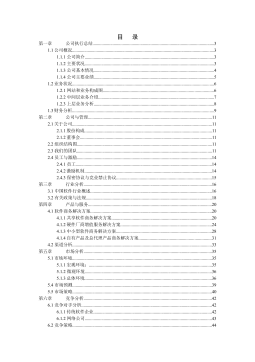
目 录
中文摘要
ABSTRACT
第一章 绪论 ................................................................................................................. 1
1.1 课题来源 ........................................................................................................ 1
1.2 课题研究背景 ................................................................................................ 4
1.3 国内外研究水平及进展 ................................................................................ 5
1.3.1 太阳能吸附式制冷的基本原理 ............................................................ 5
1.3.2 吸附式制冷工质对的研究分析与比较 ................................................ 7
1.3.3 传热强化技术的研究进展 .................................................................. 12
1.3.4 13X 沸石分子筛吸附/脱附性能的研究现状 ..................................... 13
1.4 本研究的意义和内容 .................................................................................. 14
1.5 本章小结 ...................................................................................................... 15
第二章 建立整体成型复合吸附床的计算模型 ....................................................... 17
2.1 整体成型复合吸附床的结构 ....................................................................... 17
2.2 吸附床数学模型的建立 ............................................................................... 18
2.2.1 吸附床传热系数的计算 ...................................................................... 19
2.2.2 建立吸附床数学模型 .......................................................................... 22
2.3 本章小结 ....................................................................................................... 25
第三章 整体成型复合吸附剂的测试实验台的搭建 ............................................... 26
3.1 13X 沸石分子筛复合成型吸附剂样品的挑选及制备 ............................... 26
3.1.1 13X 沸石分子筛的分类与结构性质 .................................................. 26
3.1.2 13X 沸石分子筛复合成型吸附剂样品的制备材料及所需设备 ...... 28
3.1.3 13X 沸石分子筛复合成型吸附剂的制备流程 .................................. 30
3.2 吸附性能测试系统的实验台搭建 ............................................................... 31
3.2.1 新型测试整体成型太阳能制冷吸附剂吸附性能装置的设计原理 .. 31
3.2.2 实验台制作及搭建 .............................................................................. 34
3.3 本章小结 ....................................................................................................... 38
第四章 复合成型吸附剂脱附/吸附性能测试.......................................................... 39
4.1 实验方案的设计 ........................................................................................... 39
4.1.1 实验测试流程及步骤 .......................................................................... 42
4.1.2 实验数据的记录与采集 ...................................................................... 45
4.2 实验结果分析与比较 ................................................................................... 47
4.2.1 不同吸附剂样品脱附/吸附水量变化及分析 ..................................... 47
4.2.2 测试系统内部真空度变化及分析 ...................................................... 49
4.2.3 吸附床温度变化 .................................................................................. 51
4.2.4 13X 沸石整体成型吸附剂样品的热力计算 ...................................... 53
4.2.5 整体成型吸附剂 Z8 与13X 沸石原粉 Z0 脱附/吸附性能比较 ....... 59
4.2.6 整体成型复合吸附剂 Z8 在不同温度下脱附性能测试及比较 ........ 61
4.2.7 测试方法的可行性和可靠性分析 ...................................................... 62
4.3 13X 沸石分子筛复合成型吸附剂性能汇总及比较 ................................... 64
4.4 本章小结 ....................................................................................................... 65
第五章 研究结论与展望 .............................................................................................. 67
5.1 研究结论 ....................................................................................................... 67
5.2 课题展望 ....................................................................................................... 67
参考文献 ........................................................................................................................ 68
在读期间公开发表的论文和承担科研项目及取得成果…………………………….74
致谢 ................................................................................................................................ 75

第一章 绪论
1
第一章 绪论
1.1 课题来源
太阳能是一种绿色能源,具有环保洁净、取自天然、无需开采和提炼等优点,
将其有效地利用起来,不仅能够有效缓解全球能源危机问题紧张,而且还能在一
定程度上缓解环境污染问题,因而长期以来一直受到各国政府及科技界、研究机
构的重视。而今,节能是一个世界性热点,据报道,国际上民用空调所耗电能占
民用总电耗的 50%左右,如若将太阳能运用于空调系统中,将大大的减小电力的
消耗,减少碳排放量;其次,从环保方面考虑,根据《蒙特利尔议定书》,目前压
缩式制冷机主要使用的 CFC 类工质,由于其对大气臭氧层有破坏作用应停止使用。
从2001 年1月1日开始,一些欧盟国家就开始实施更加严格的限制生产、使用和
进出口氟氯烃类制冷剂,包括 CFCs 和HCFCs 制冷剂及其产品的政策,加快淘汰
消耗臭氧层物质(ODS)的脚步,保护臭氧层。我国作为签署《蒙特利尔议定书》的
国家之一,严格履行自己的承诺,并于 2004 年11 月出台《中国 Halon/CFCs/CTC
生产加速淘汰计划》,主动将自己的“禁氟大限”计划从原定的 2010 年提前至 2007
年。太阳能制冷所采用的制冷剂为硅胶、活性炭、分子筛等环保人工合成材料,
对环境友好,臭氧层破坏系数和温室效应系数均为零,适合当前环保政策实施的
要求,同时也减少了燃烧煤炭、石油等能源发电所带来的环境污染问题[1]。太阳能
制冷是太阳能应用的一个重要方面,是一个极具发展前景的新兴领域,也是当今制
冷界技术研究的热点和难点之一。楼宇建筑、航空、医疗、冷冻冷藏等各行各业
对太阳能制冷有着一定的需求[2]。
国内外开始对太阳能制冷这一领域进行研究可以追溯到上世纪 20 年代,通过
各专家学者的不懈努力,提出了多种制冷方法并取得了初步进展。根据资料表明,
太阳能制冷大体可分为两条途径:⑴太阳能-电-制冷方式:光电制冷、热电制冷即
为这种方式的运用实例;⑵太阳能-热-制冷:例如吸收式制冷、吸附式制冷、喷射
式制冷等。光电转换的制冷方法由于成本较高,虽然研究较多,但实际推广应用
较少,而以热制冷由于它的简便廉价而备受青睐。太阳能吸收式制冷、喷射式制
冷和吸附式制冷为以热制冷方式的应用,目前这三种制冷方式都已分别进入试验
和应用阶段[3]。
目前广泛利用太阳能的设施为太阳能集热器和太阳能光伏电板。太阳能集热
器是通过收集太阳能的辐射量,直接用于生活热水和建筑采暖的供应;也可通过
能量转化,以热制冷,运用于空调制冷及物品冷藏等方面。光伏电板则是将太阳
能转化为电能,则电能可运用广泛的用电设备中。
13X 沸石分子筛整体成型太阳能吸附剂吸附性能研究
2
太阳能热水器是目前应用比较广泛的太阳能利用装置,其原理是太阳能集热
器通过与阳光进行辐射换热,从而将热量传递给生活用水,从而产生热水,提供
给人们使用。但由于季节的变化,太阳能的利用是存在矛盾的:①夏季:环境温
度高,太阳光光照强度大,但热量需求量小,需要大量的冷量降温;②冬季:环
境温度低,太阳光光照强度小,但热量需求量大[3]。如果能在夏季充分利用太阳能
的辐射热而产生冷量,完全可以作为传统空调的辅助手段运用于实际工程中,所
以,利用太阳能制冷是一个极具发展前景的领域,也是当今制冷界技术研究的热
点。
近年来,各国政府花费大量人力物力致力于太阳能方向的研究,很多研究所
及高校都有关于太阳能方向的研究课题,太阳能吸附式制冷即为其中之一。太阳
能吸附式制冷技术不仅打破了传统的“以热制热”的模式,而且具有环保、减弱热岛
效应等诸多优点。同时,夏季冷量需求较大的地区往往太阳光比较充足,从时间
和地域上的高度匹配性可看出,吸附式制冷技术的运用具有潜在的、巨大的优势。
太阳能集热器在夏季普遍存在热量过剩、无处可用的问题,把太阳能和吸附制冷
相结合可以很好将剩余热量充分利用,为太阳能集热器拓展应用开辟新的领域[4]。
太阳能吸附式制冷属于物理式吸附,是利用物质在不同压力下的物态变化(冷
凝放热/蒸发吸热)来达到制冷的目的。用于吸附式制冷系统的吸附剂-制冷剂组合
种类繁多,例如:硅胶-水,活性炭-甲醇,氯化钙-氨,沸石-水,活性炭-乙醇等工
质对。它们都各自有一定的优缺点,如活性炭-甲醇工质对可谓应用最广,但甲醇
有毒,限制了它的使用[5]。其他工质对均无毒、无害,不会破坏大气臭氧层,并且
运行过程无活动部件,无需消耗二次能源(如电力、煤气等)。
与其他制冷方式相比较,太阳能吸附制冷空调有以下 4个特点[6]:
1) 可以无运动部件,系统结构及运行控制等较简单(不需要溶液泵或精馏装
置),无噪音;
2) 可采用不同的吸附工质以适应不同的热源及蒸发温度,对于食品或医药冷
藏等需要达到 0℃以下的工况,可采用活性炭-甲醇/活性炭-氨吸附工质对。如太阳
辐射强度大、能辐射时间长的地区可采用沸石分子筛-水吸附工质对;
3) 吸附式制冷方式对太阳能有较大的依赖性,其系统的制冷能力与自然季节
变化规律相匹配,即太阳能辐射越强,天气越热,需要的冷负荷越大时,吸附式
制冷的制冷效果则越好;
4) 由于太阳能辐射具有周期性、不连续性等特点,一般吸附式制冷只能作为
辅助制冷系统或需要配置辅助热源。
太阳能吸附性制冷的原理是利用特定的吸附剂(沸石-硅酸钠)对某些工质(水、

摘要:
展开>>
收起<<
摘要13X沸石分子筛是众多类型人工合成沸石的一种,是对环境友好的绿色自然工质对,其强大的孔道体系使其具备较好的物理性吸附能力。本研究的主要内容就是对13X沸石分子筛在低真空的环境下测试其对制冷剂的吸附/脱附能力,简而言之,本实验原理为由于吸附剂在脱附/吸附制冷剂的过程导致了内部气压发生变化,制冷剂发生冷凝/蒸发的相变,从而出现制热/制冷的现象。本研究的实验基础是需要满足低真空的密封测试环境,因此设计并搭建了一台名为“新型测试整体成型太阳能制冷吸附剂吸附性能的装置”,该装置由不锈钢密封焊接而成,包括真空测试电阻规、真空阀门、真空连接头、真空硅胶管等部件。该装置经过抽真空处理后,最低真空度可达20...
相关推荐

作者:牛悦
分类:高等教育资料
价格:15积分
属性:79 页
大小:2.63MB
格式:PDF
时间:2024-11-11